|
|
| Vintage Hockey Memorabilia, Page 1 |
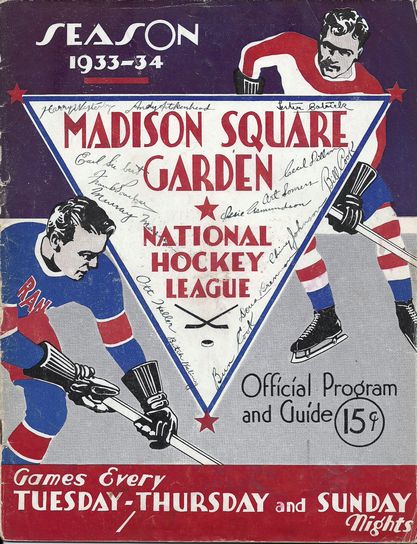
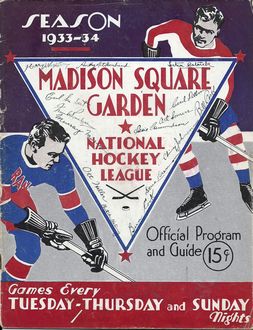
| 1933-1934 New York Rangers Team Signed Program
including five deceased Hockey Hall of Fame Players |
 |
 |
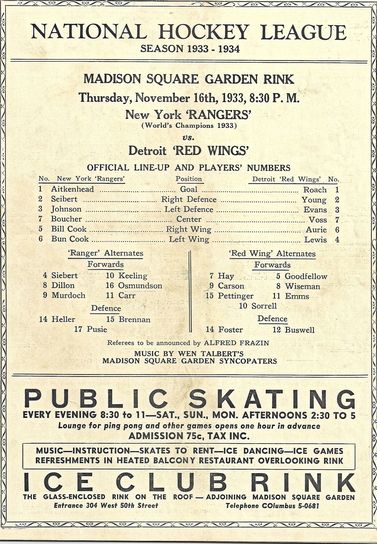
This November 16th, 1933 New York
Rangers Program has been signed on the front cover by Andy Aitkenhead, Lester
Patrick, Harry Westerby (trainer), Earl Siebert, Frank Boucher, Murray Murdoch,
Ott Heller, Butch Keeling, Bun Cook, Doug Brennan, Ching Johnson, Bill Cook,
Cecil Dillon, Art Somers and Ossie Osmundson. On that night the New York Rangers
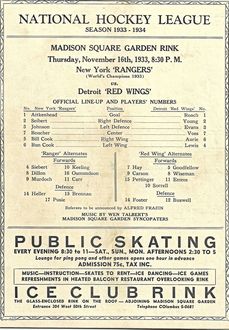
faced off against the Detroit Red Wings in Madison Square Garden. The Rangers
were the reigning Stanley Cup Champions. The Rangers starting line-up that night
consisted of Andy Aitkenhead (goaltender), Earl Siebert (right defence), Ching
Johnson (left defence), Frank Boucher (center), Bill Cook (right wing) and Bun
Cook (left wing). The Detroit Red Wings starting line-up consisted of John Ross
Roach (goaltender), Doug Young (right defence), Stewart Evans (left defence),
Carl Voss (center), Larry Aurie (right wing) and Herbie Lewis (left wing).
The Rangers would not repeat as Stanley Cup Champions in 1934, instead they
finished with a record of 21 Wins, 19 losses and 8 ties and would be eliminated
in the 1st round of the Stanley Cup Playoffs.
(All statistics courtesy of
http://www.hockeydb.com). |
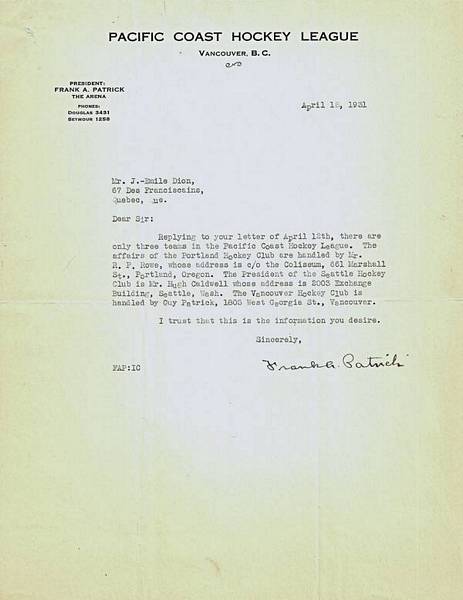
| 1931 Pacific Coast Hockey League letter signed by PCHL President, Frank Patrick |
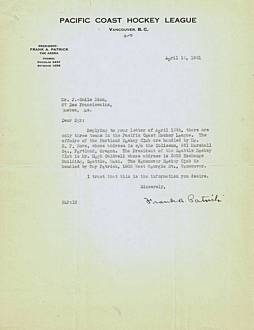 |
| This 8" x 10", Pacific Coast Hockey league (PCHL) letter was sent to Emile Dion, a Quebec sportswriter on April 18, 1931 by PCHL President Frank Patrick. The letter lists the names and addresses of the three teams (Portland, Seattle and Vancouver) in the PCHL at that time. |
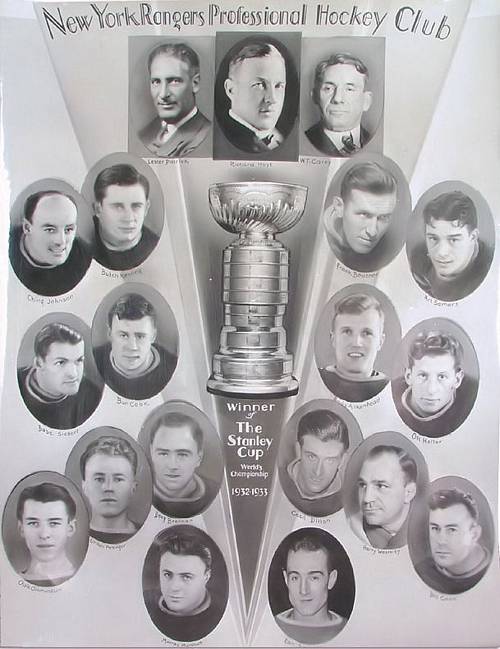
| 1933 New York Rangers, Stanley Cup Champions, Player Presentation Photo |
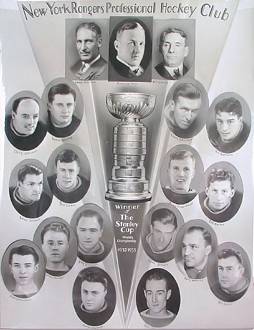 |
This large, 13" x 16.5", New York Rangers Presentational Photo was presented to Andy Aitkenhead who was the goaltender for the New York Rangers during their Stanley Cup Championship season in 1932-33. This remarkable team photo was only presented to players and coaches following the Rangers World Championship of 1933. Includes the images of Keeling, Johnson, Siebert, Cook, Brennan, Boucher, Somers, Heller, Aitkenhead, Patrick (C), and Hoyt (C).
The 1933 Stanley Cup Finals were held from April 4 to April 13, between the New York Rangers and the Toronto Maple Leafs. The Rangers won the series 3–1 to win their second Stanley Cup. The Rangers however did not get to win Lord Stanley's cup the easy way. After game one, the Rangers would vacate Madison Square Garden for the circus. The remainder of the series would be played away from the Garden. Bill Cook would become the first player to score a Cup-winning goal in overtime. Rookie goalie Andy Aitkenhead
would post the fourth shutout by a rookie in the finals by recording two shutouts in the four game series. |
|
|
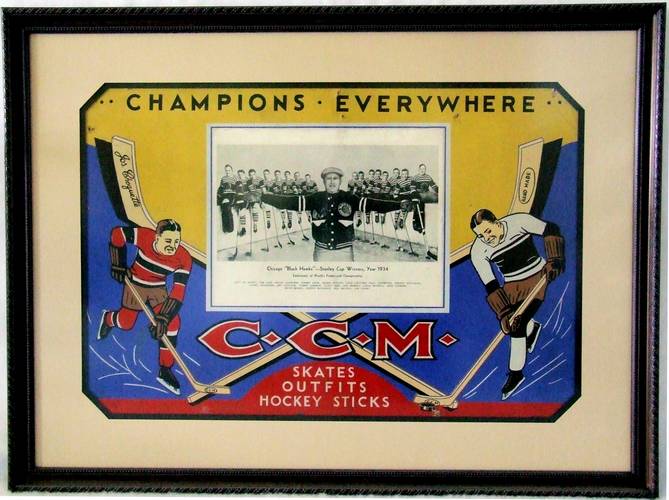
| 1934 C.C.M. Advertising Piece Featuring The Chicago Black Hawks (Winners of the Stanley Cup) |
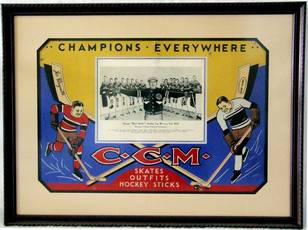 |
This large, 19" x 26", C.C.M (Canadian Cycle Manufacturing) advertising piece was produced in late 1934 and commemorates the Stanley Cup Champion, Chicago Black Hawks. This piece would have originally stood on a counter as a display and was intended to drive sales of C.C.M. skates and other hockey equipment.
1934 had been a tough year for the Black Hawks, however in the end they won it all. The 1934 Stanley Cup finals were held from April 3 to April 10, between the Chicago
Black Hawks and the Detroit
Red Wings. The Black Hawks won the best-of-five series 3–1 to win their first Stanley Cup. Chicago's Chuck Gardiner would limit Detroit to just two goals in Chicago's three victories, including a shutout in the final game which went to double overtime. Gardiner though would not get to savor the victory for long as he died from a brain hemorrhage brought on by a tonsillar infection, at the age of 29. After leaving for a singing lesson in June 1934, Gardiner, a baritone, collapsed. He went into a coma, from which
he never woke. He was posthumously elected to the Hockey Hall of Fame in 1945. |
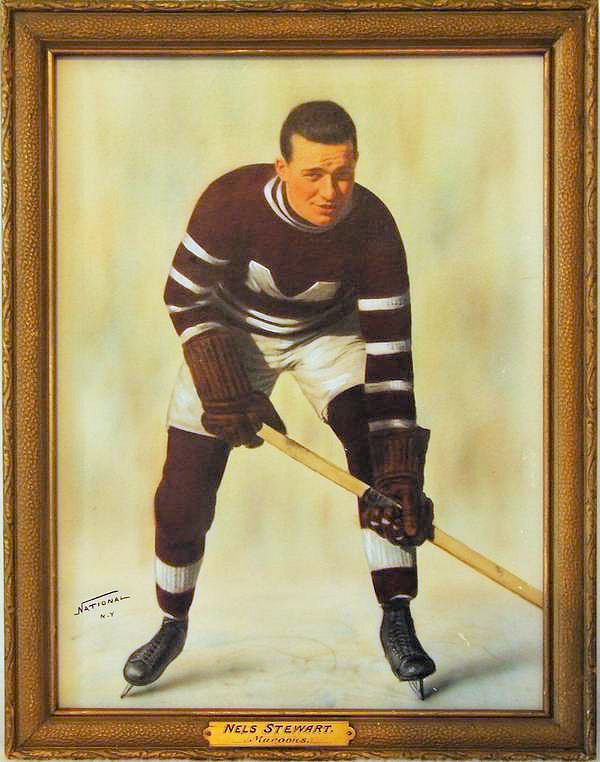
| Late 1920's - early 1930's Lithograph of Nels Stewart of the Montreal Maroons (by National of New York) |
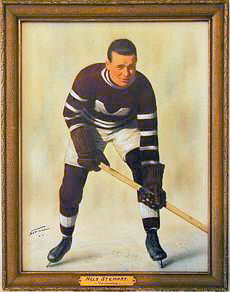 |
This late 1920's, early 1930's lithograph (15" x 20") of Nels Stewart of the Montreal Maroons (by National of New York) came from the estate of a family in New York. It appears to be a lithograph that was then touched up with paint in various in order to highlight features of the player. It look just like the manner in which photographers used to touch up press photos in the early days in order to draw out certain details (a players face, team logo etc). I
was told that this framed
lithograph (along with the other one of Bill Carson) hung in Madison Square Garden up until the late 1960's.
Nels Stewart was nicknamed "Old Poison" as he was the most feared goal scorer of his time. In fact, for 16 years he was hands down the greatest goal scorer of all time, a title that only 6 other players in NHL history can lay claim to. In 1936 he surpassed Howie Morenz to become the all time leader in goals. He ended up with 324 goals in his career. He would remain the all time leading
goal scorer until 1952 when Rocket Richard would score career goal 325. Yet Stewart would always have his fair share of detractors. More on that later. Born in Montreal but raised in the Toronto area, the burly, 200-pounder
collected a total of 324 goals and 191 assists in 653 league games. He was the first to score more than 300 goals in the NHL, a record that stood for many seasons. Stewart learned his hockey in Toronto, where his family had moved when he was a boy. He grew up in the Balmy Beach district with his future linemate, Hooley Smith, and joined the Montreal Maroons for the 1925-26 season. Teamed with fellow Hall of Famers Babe Seibert and Smith, the old Montreal Maroons had the most feared trio in hockey with the
rough and tumble famed "S Line." Stewart scored 134 times in just 5 seasons with the "S" line, including 2 in 4 seconds, a NHL record. As a rookie he captured the 1926 Hart trophy as the league's MVP, the same year he helped the Maroons capture the Stanley Cup. He repeated as MVP in 1930. Nels is best remembered for his days with the Maroons, Stewart also enjoyed successful seasons with the Boston Bruins and the New York Americans. Nels was inducted in the Hockey Hall of Fame in 1962, 5 years
after his death.
Nels is mainly forgotten when you hear people talk about the greatest players ever and that may be due to his reputation as a bully which did not endear him to many fans. He was known more than once to participate in stick swinging battles and other acts of violence. While the sting of his scoring prowess was inevitable, his skating was down right slow and cumbersome. There were no fancy dashes to pull the crowd out of their seats for Old Poison. Instead, he relied on others to get him the
puck once he parked himself in scoring position. But he was lethal with his shot once he did get the puck. His shot was fast and heavy, and noted to cause a more than a few injuries to the maskless goalies of the era, most notably Lorne Chabot in the 1928 playoffs. Cooper Smeaton, a referee of the day, regarded Stewart as one of the all time greats. "In today's game," said Smeaton back in the 1980's, "Nels would have scored 100 goals. He was terrific in front of the net, a big strong fellow who
had moves like a cat. Stewart never seemed to be paying any attention to where the puck was and, if you were checking him, he'd even hold little conversation with you; but the minute he'd see the puck coming his way he'd bump you, take the puck and go off and score." |
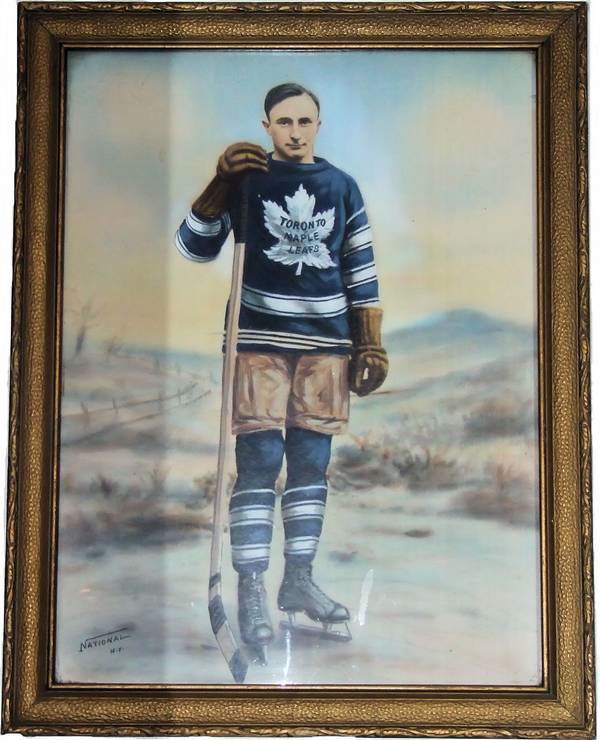
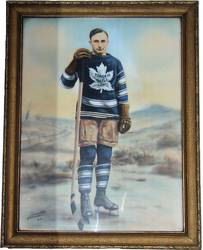
| Late 1920's - early 1930's Lithograph of Bill Carson of the Toronto Maple Leafs (by National of New York) |
 |
|
This 1930's lithograph (15" x 20") of Bill Carson of the Toronto Maple Leafs by National of New York came from the estate of a family in New York. It appears to be a lithograph that was then touched up with paint in various in order to highlight features of the player. It look just like the manner in which photographers used to touch up press photos in the early days in order to draw out certain details (a players face, team logo etc). I was told that
this framed lithograph
(along with the other one of Nels Stewart) hung in Madison Square Garden up until the late 1960's.
In the early 1920s, Bill went to the University of Toronto to study dentistry. While at the U of T he excelled on the varsity hockey team. In 1926, he joined the NHL's Toronto
St. Pats and in 1927, he was a charter member of the new Toronto Maple Leafs. It is actually even
rumored that he scored the first Maple Leaf goal! In 1928, Bill's contract was sold to the Boston Bruins and he scored the winning goal in the Bruins' first Stanley Cup. Unfortunately, his career seems to have been cut short by an arm injury he received while with the St. Pats. Although he only played in the NHL for four years, he also spent some time in the American Hockey League with the New Haven Eagles and,
in later years, did some scouting as well. During his short career Bill Carson was one of the best and highest paid players in the NHL. After his career in hockey, Bill returned to practice dentistry, first in Aurora and eventually in Parry Sound. Bill Carson, nicknamed "Doc", died in Parry Sound in May of 1967.
Career Notes:
Brother of Frank and Gerry; OHA-Sr. Second All-Star Team (1920, 1922, 1923); OHA-Sr. First All-Star Team (1921); Signed as a free agent by Toronto, April 16, 1926. Traded to Boston by Toronto for cash, January 25, 1929. Traded to London (IHL) by Boston for cash, November 24, 1930
|
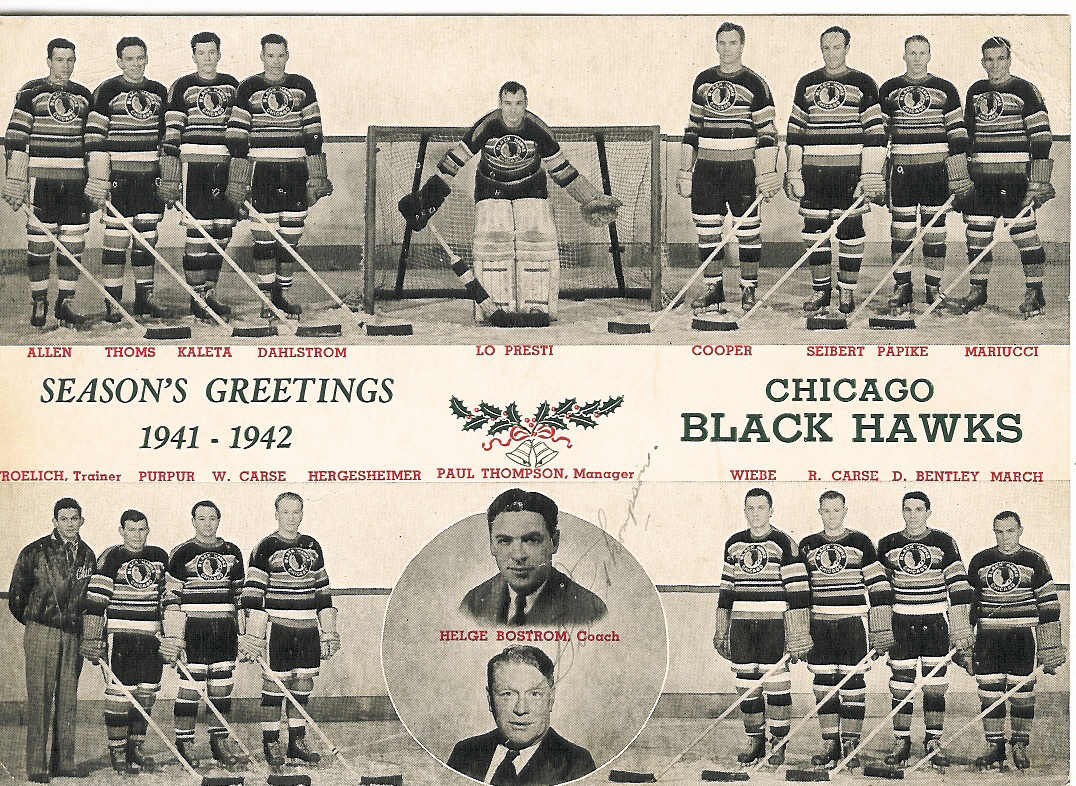
| 1941-42 Chicago Blackhawks team photo Christmas
card |
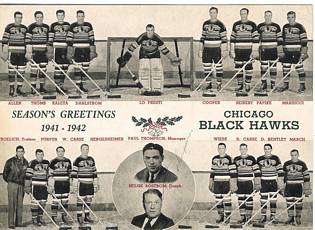
(autographed by the coach, Paul
Thompson) |
| This Chicago
Blackhawks Christmas card was sold to me by Van Hill of Calgary,
Alberta. He found the card in the back of a fireplace mantle in a
house that he was remodeling. He was kind enough to sell me the
Christmas card so I could display it on my web site for other
hockey collectors and historians to see. It is truly a miracle
that the card survived in the condition that it did for all these
years. |
1941-42 Hawks Roster
|
Player |
GP |
G |
A |
Pts. |
Pim |
| Thoms,
Bill |
47 |
15 |
30 |
45 |
8 |
| March,
Harold |
46 |
6 |
26 |
32 |
22 |
| Bentley,
Max |
38 |
13 |
17 |
30 |
2 |
| Kaleta,
Alex |
47 |
7 |
21 |
28 |
24 |
| Hamill,
Robert |
34 |
18 |
9 |
27 |
21 |
| Dahlstrom,
Carl |
33 |
13 |
14 |
27 |
6 |
| Carse,
Bill |
43 |
13 |
14 |
27 |
16 |
| Bentley,
Doug |
38 |
12 |
14 |
26 |
11 |
| Carse,
Bob |
32 |
7 |
16 |
23 |
10 |
| Seibert,
Earl |
45 |
7 |
14 |
21 |
52 |
| Allen,
George |
42 |
7 |
13 |
20 |
21 |
| Cooper,
Joe |
46 |
6 |
14 |
20 |
58 |
| Mosienko,
Bill |
11 |
6 |
8 |
14 |
4 |
| Hergesheimer,
Phil |
23 |
3 |
11 |
14 |
2 |
| Mariucci,
John |
46 |
5 |
8 |
13 |
44 |
| Wiebe,
Art |
43 |
2 |
4 |
6 |
20 |
| Johnston,
George |
2 |
2 |
0 |
2 |
0 |
| Tuten,
Audley |
5 |
1 |
1 |
2 |
10 |
| Stewart,
Ken |
6 |
1 |
1 |
2 |
0 |
| Papike,
Joe |
9 |
1 |
0 |
1 |
0 |
| Mitchell,
Bill |
1 |
0 |
0 |
0 |
4 |
| Purpur,
Clifford |
8 |
0 |
0 |
0 |
0 |
| Dickie,
Bill |
1 |
0 |
0 |
0 |
0 |
| LoPresti,
Sam |
47 |
0 |
0 |
0 |
0 |
|
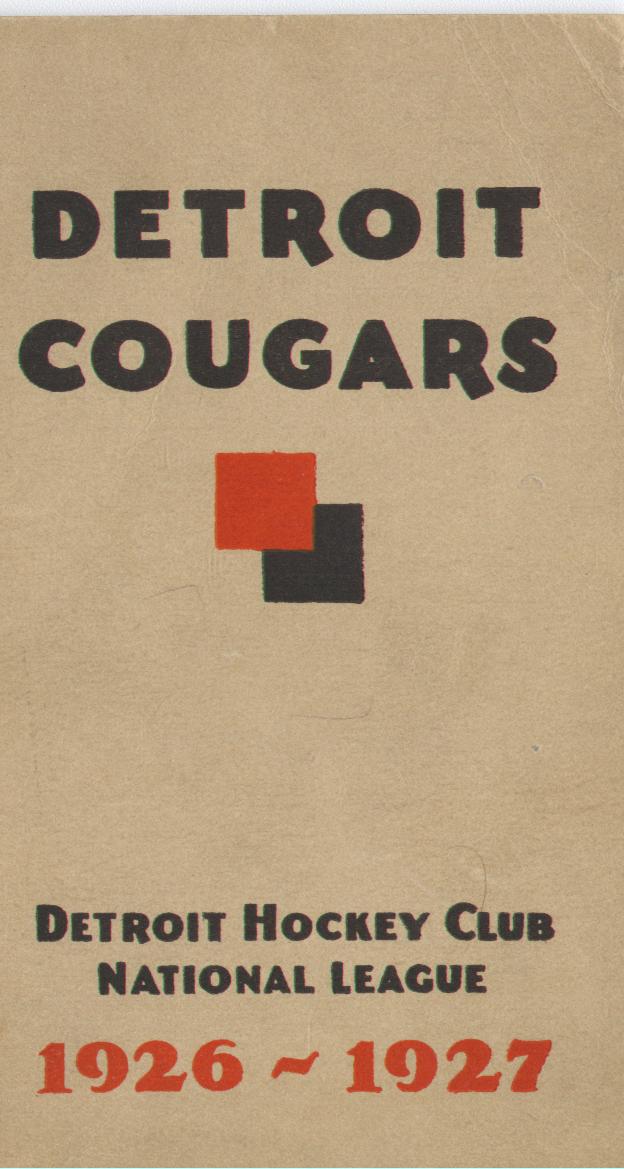
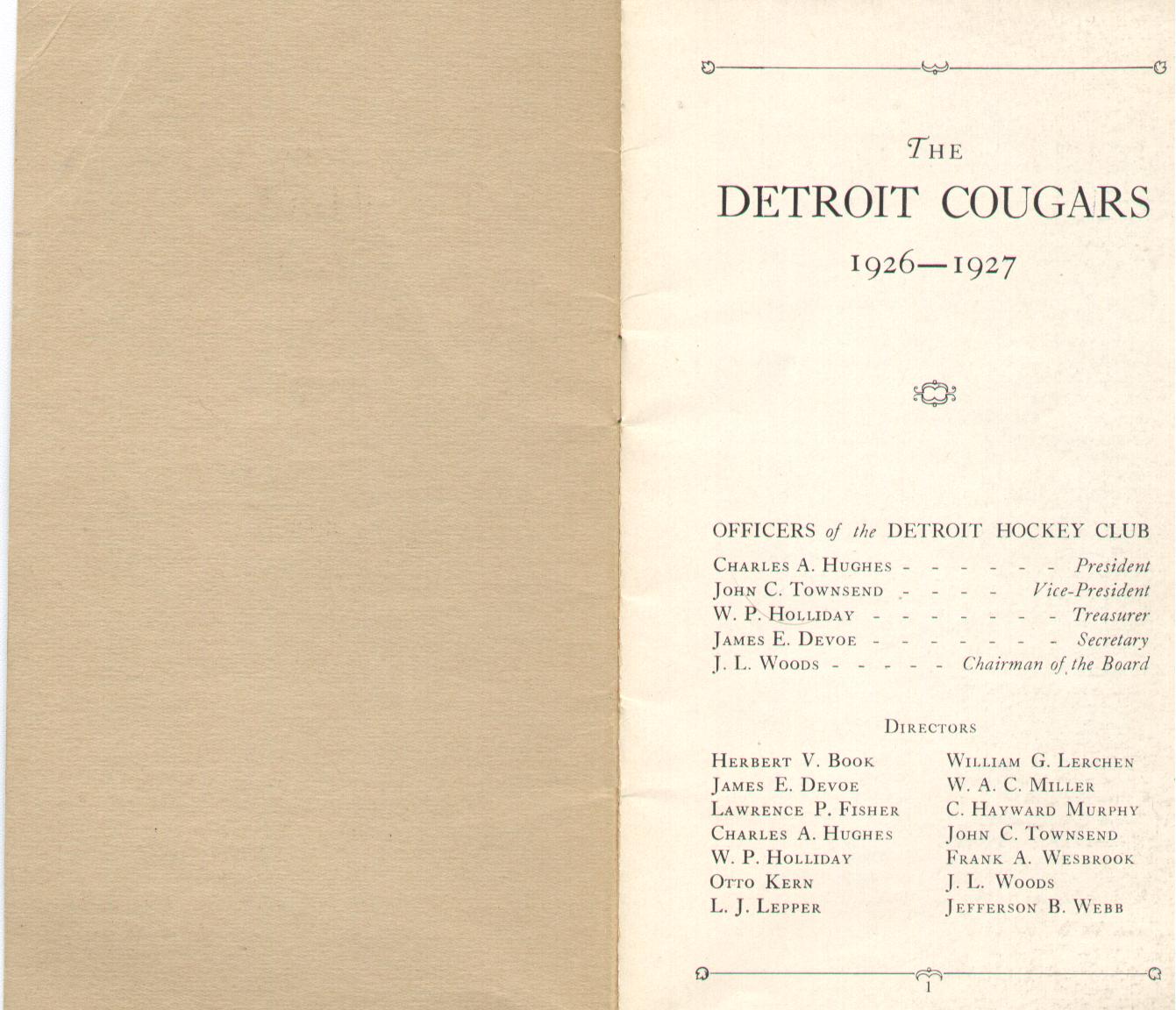
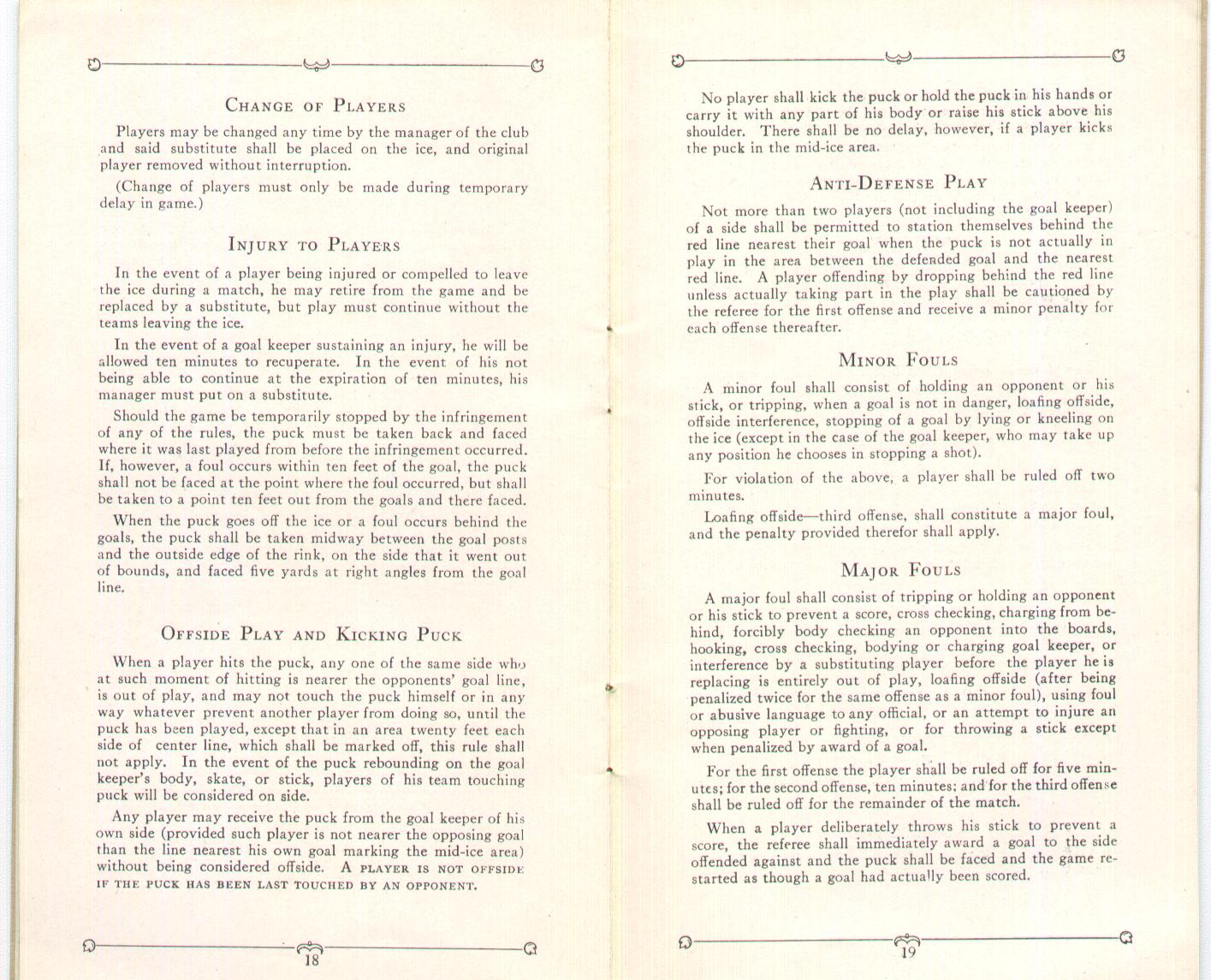
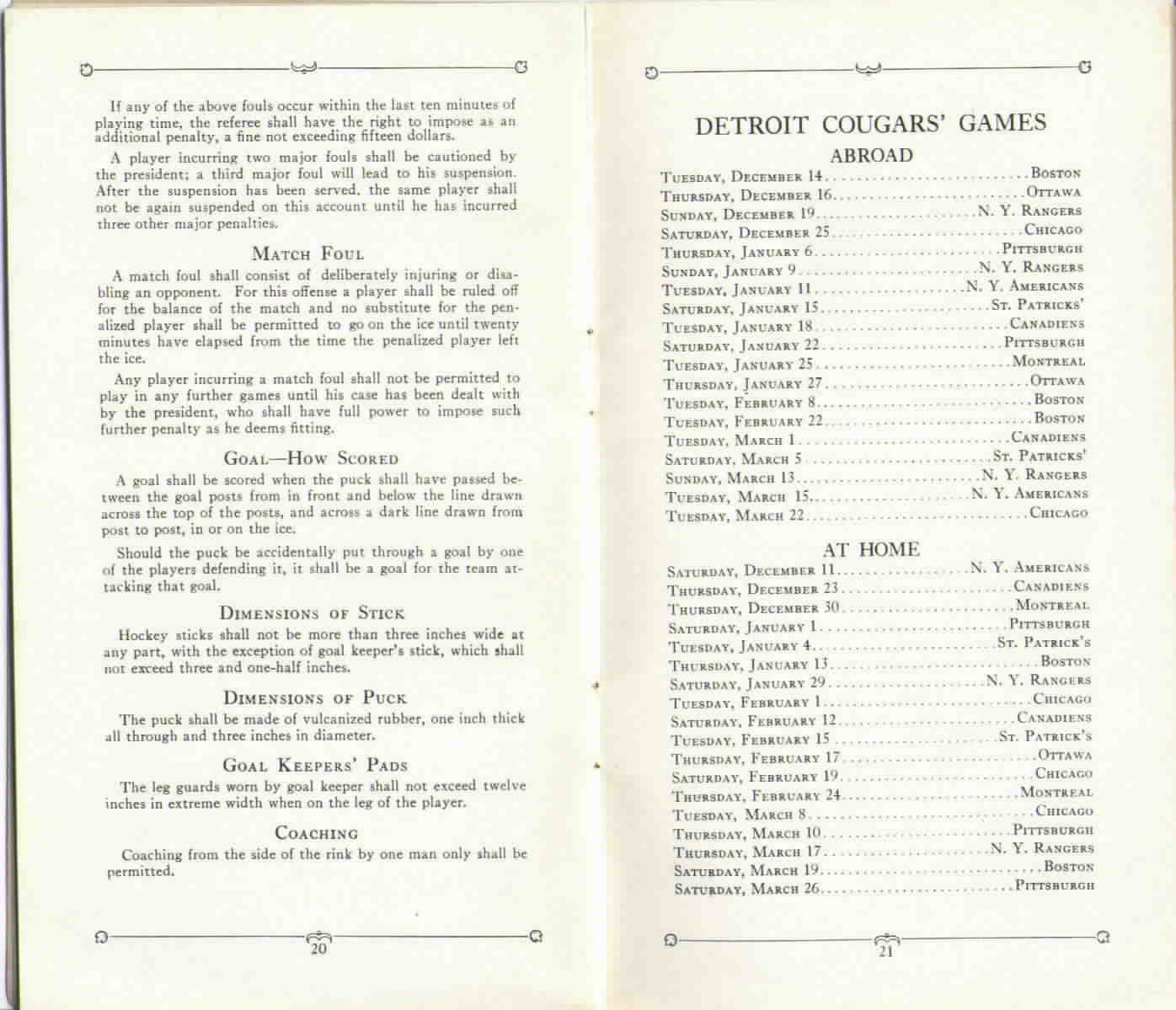
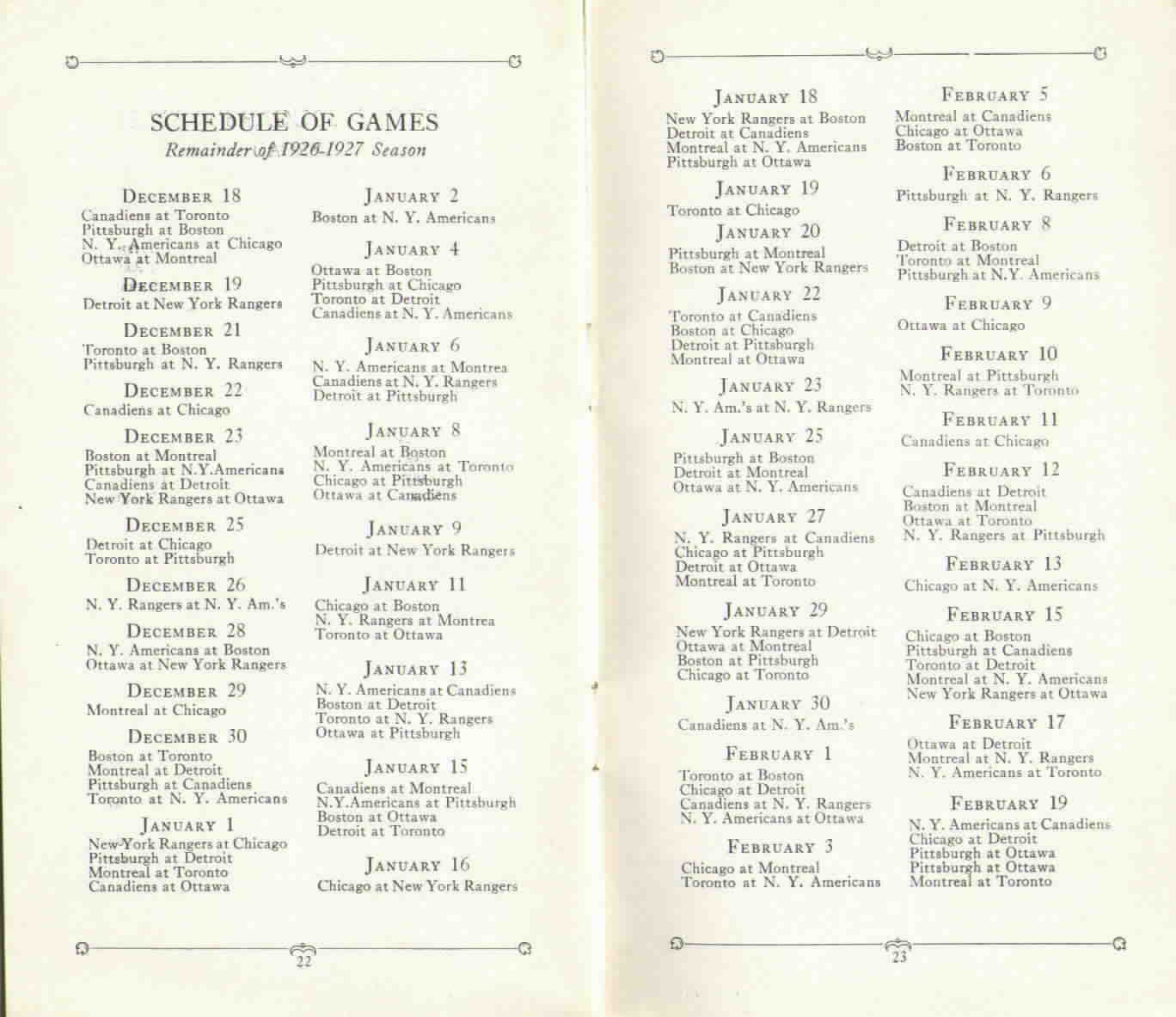
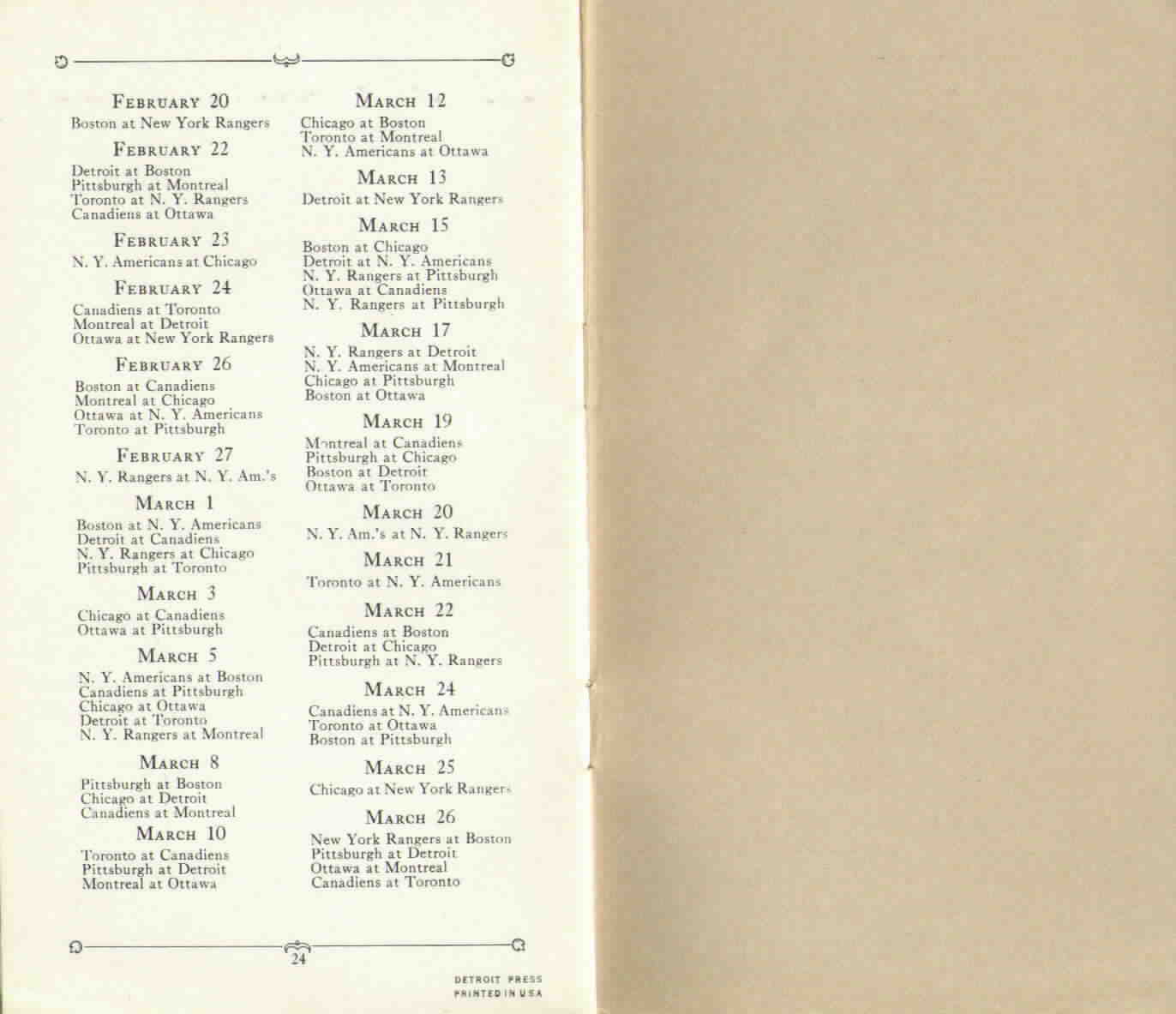
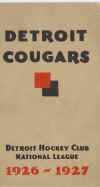
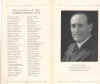
| 1926-27 Detroit Cougars Yearbook/Media
Guide |
|
|
|
|
|
|
|
|
|
|
|
|
|
|
|
|
|
|
|
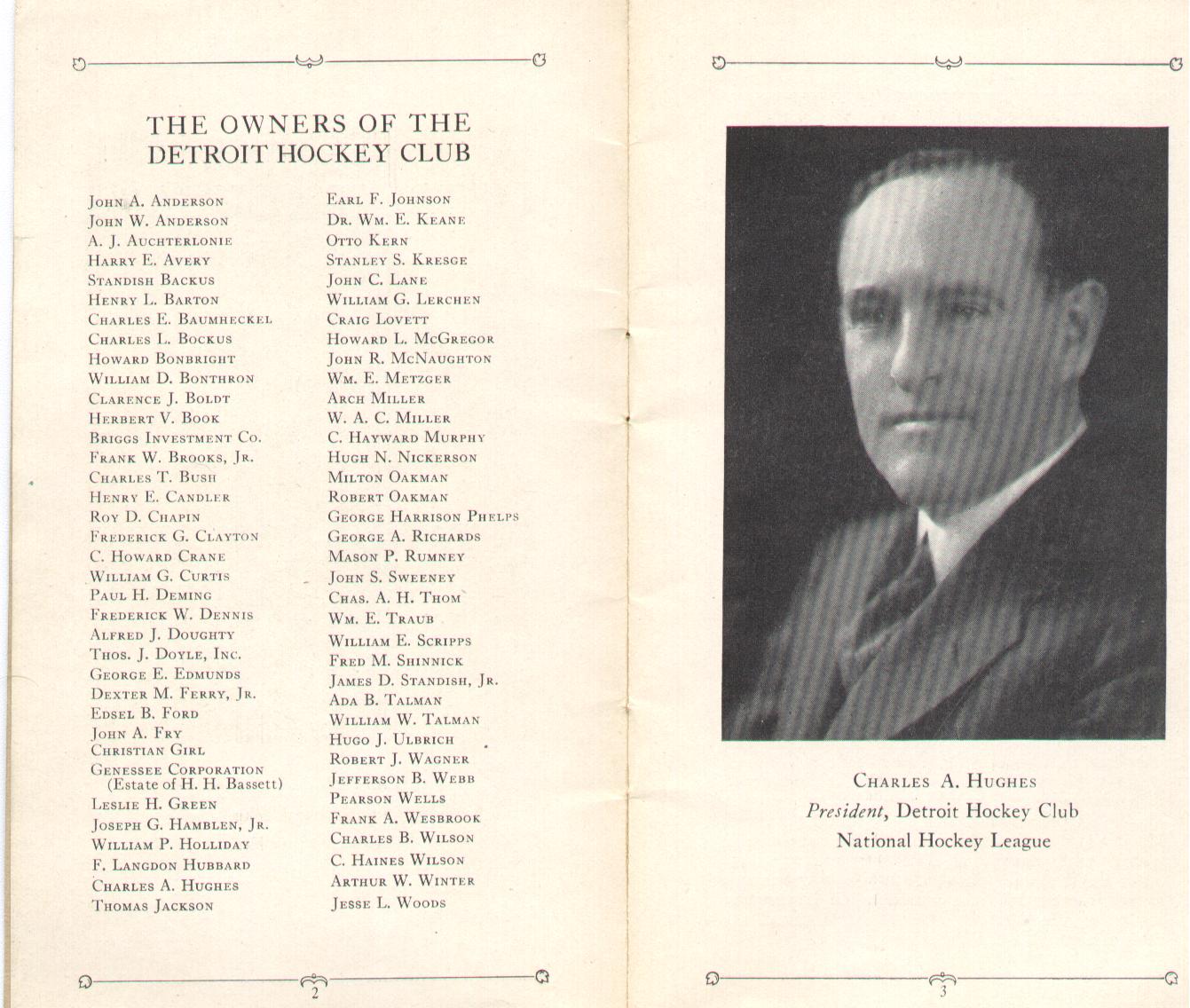
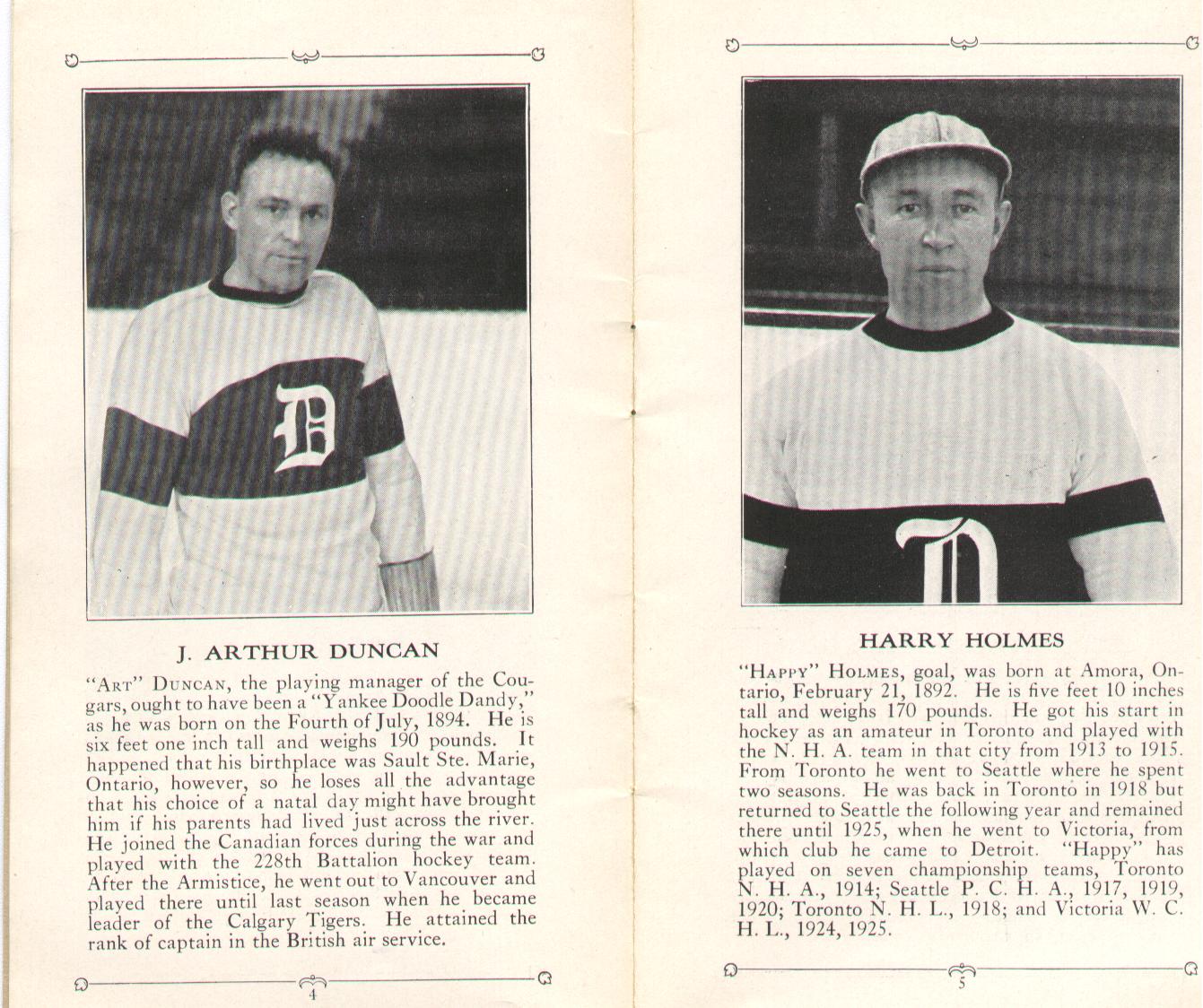
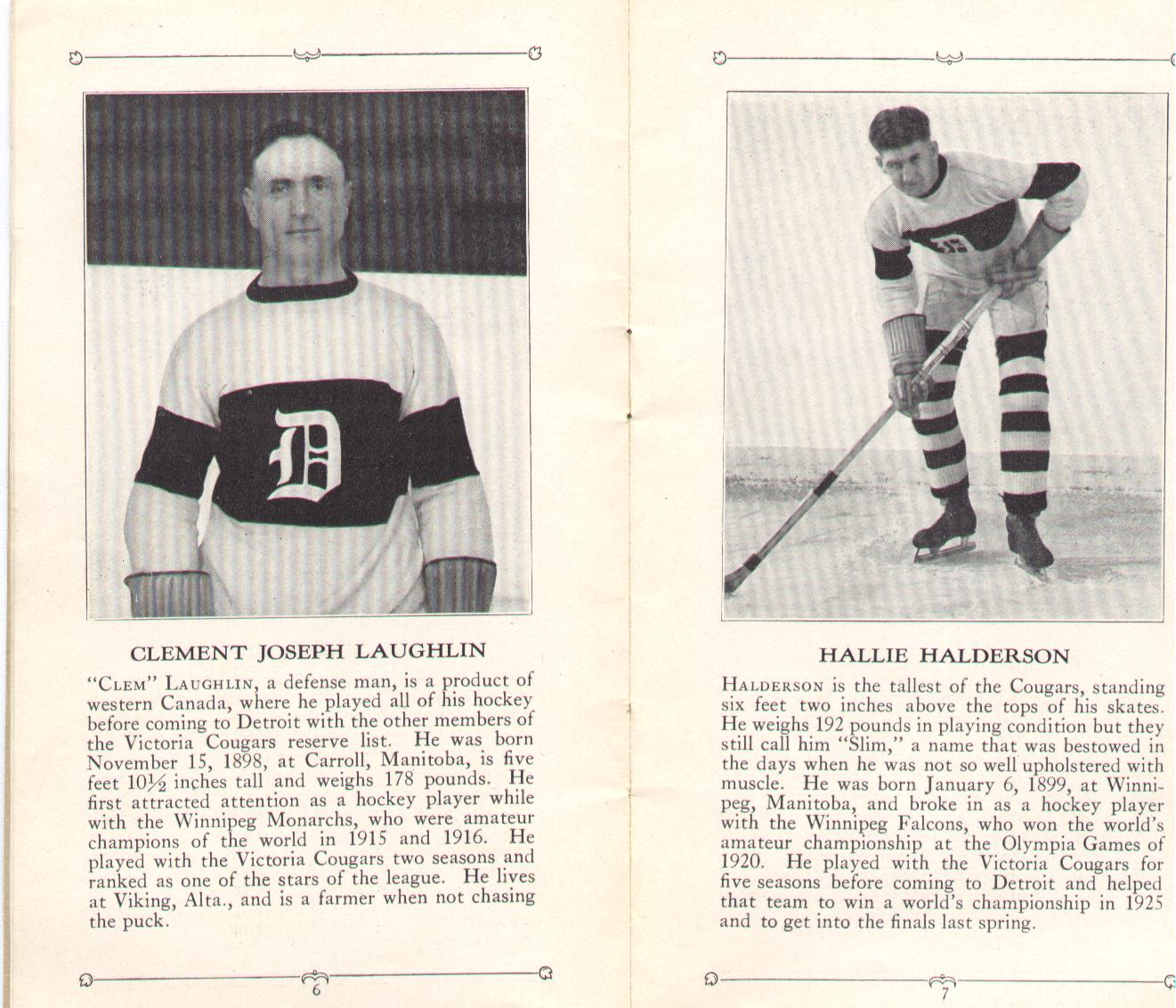
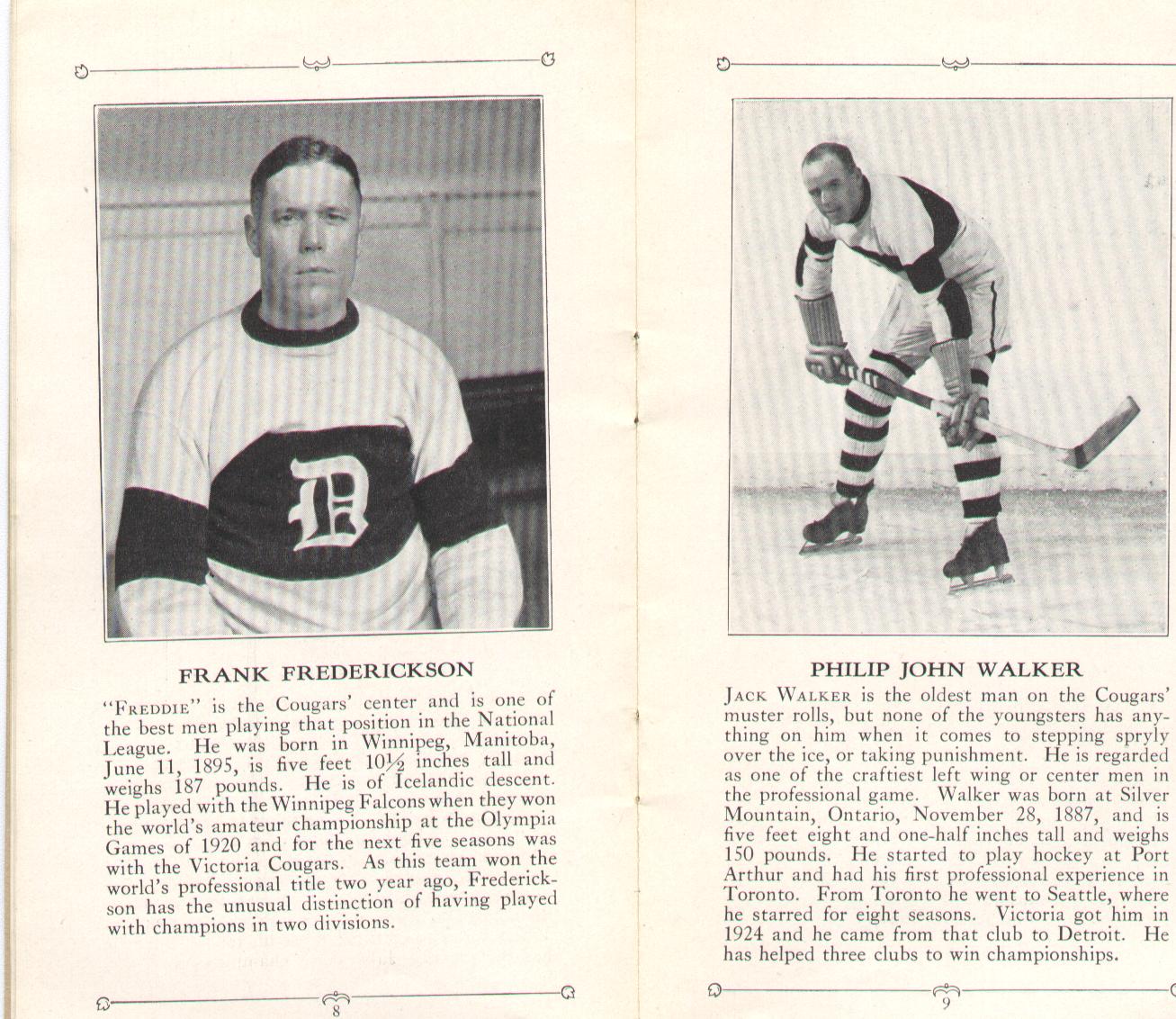
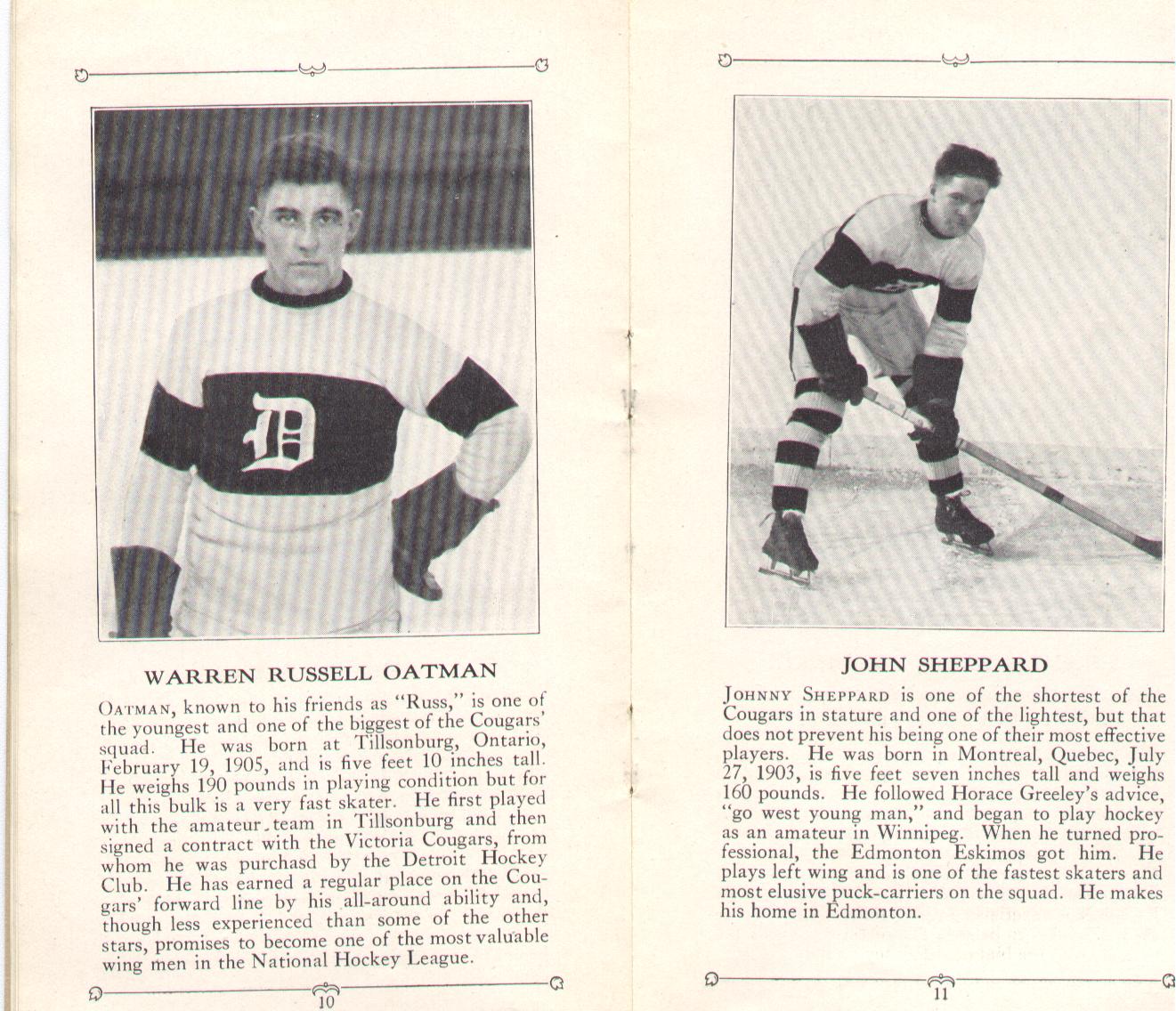
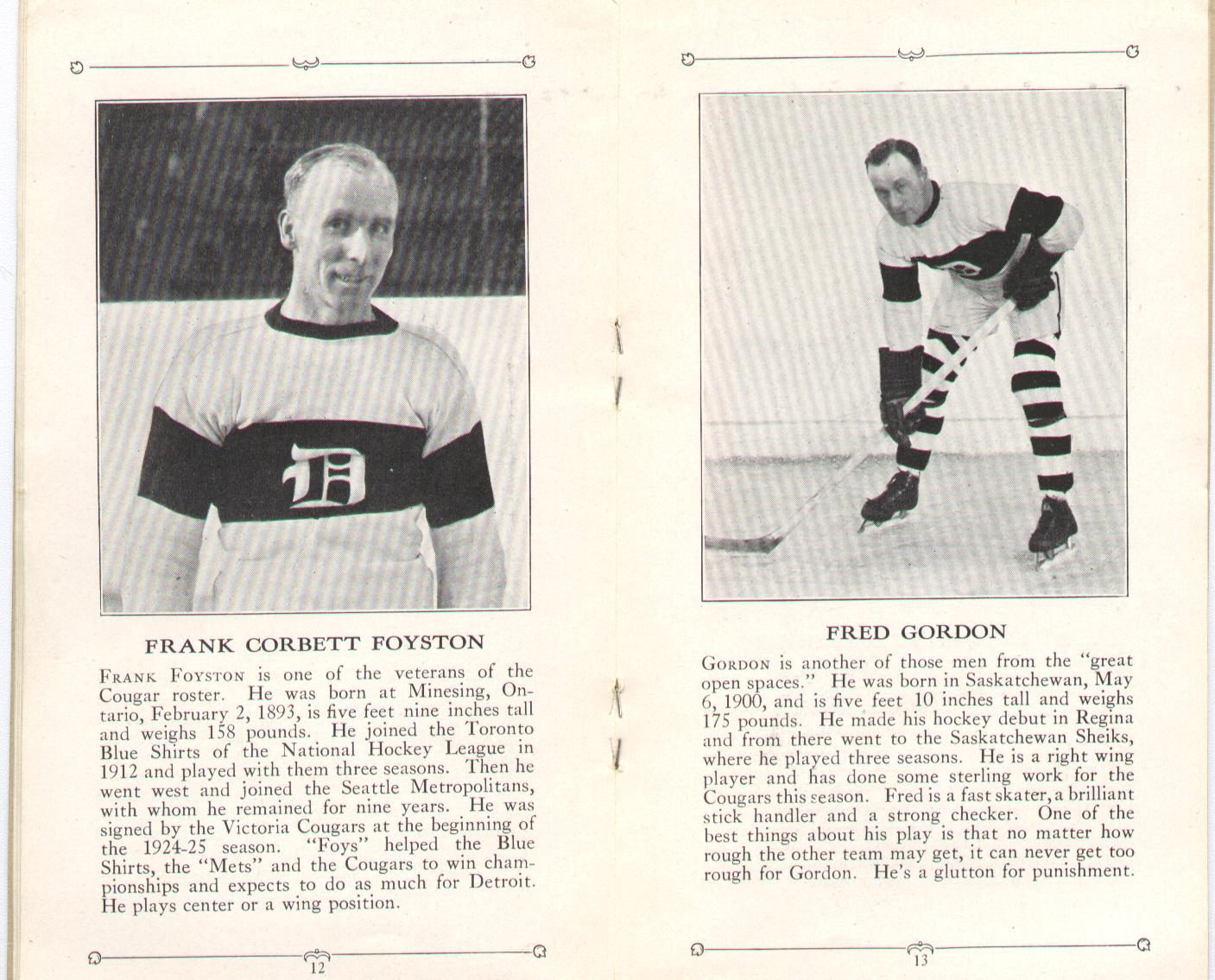
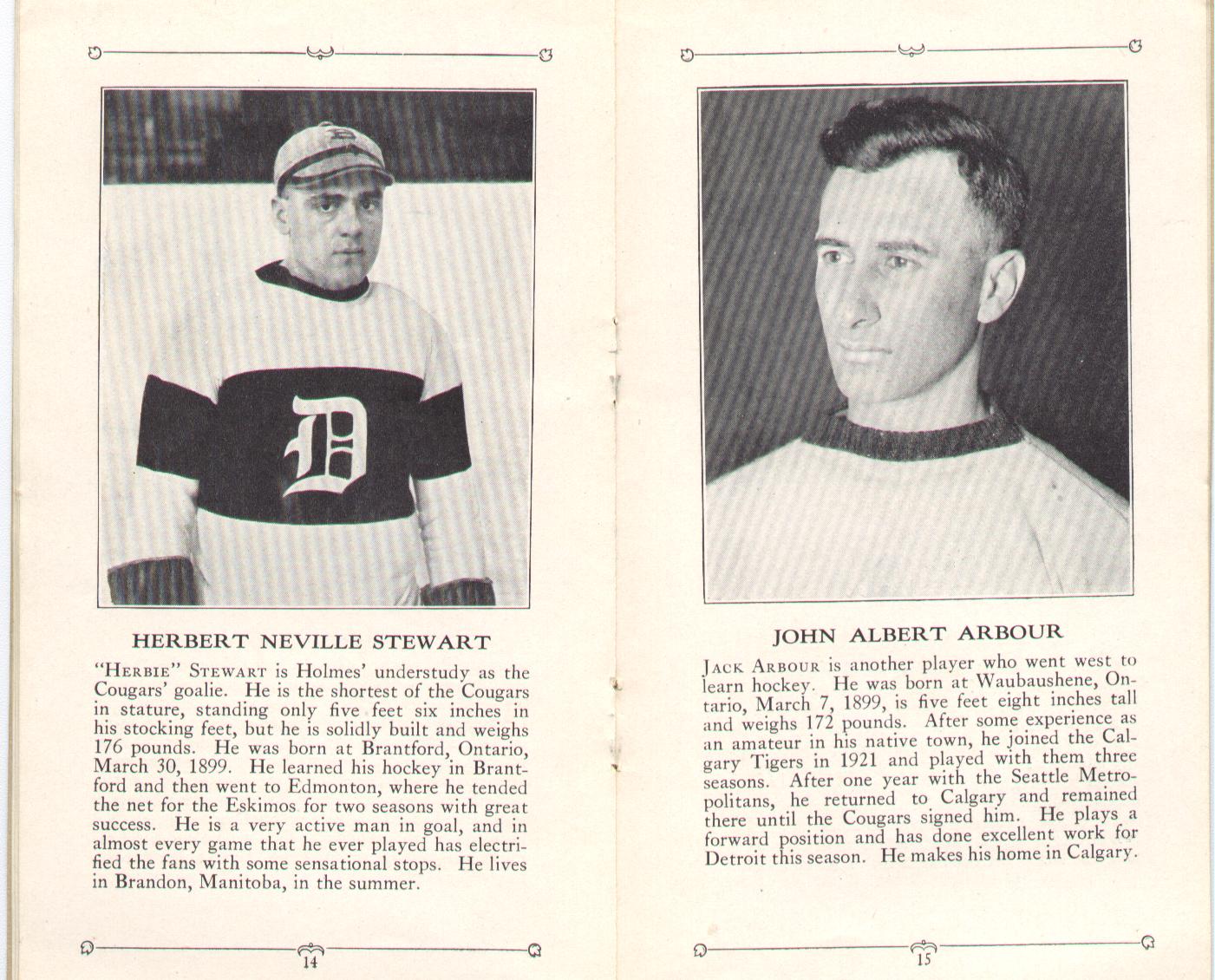
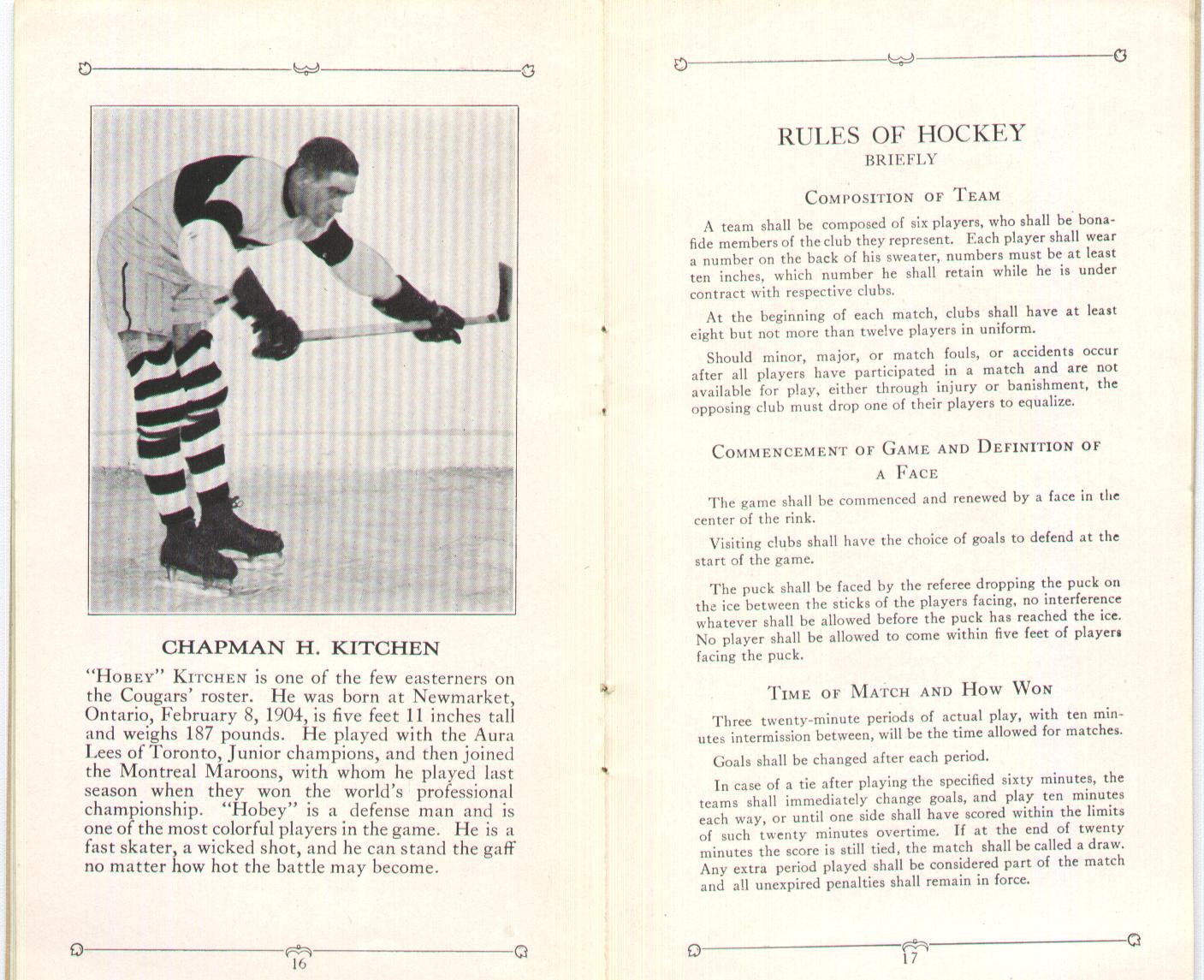
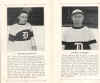
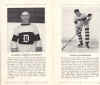
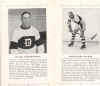
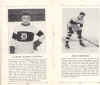
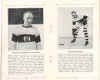
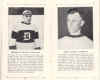
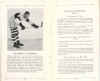
Long before the Detroit Red
Wings were the Red wings, they were the Detroit Cougars. Detroit
has its hockey history in the Western Hockey League team, the
Victoria Cougars. On May 15, 1926, players were purchased when
the entire roster of the Victoria Cougars was sold for
$100,00.00. Charles King was named the club's first President and
Art Duncan, who led the Pacific Coast Hockey League (PCHL) in
scoring while with the Vancouver in 1923-24 was named
player-manager. Some of the other original players were Happy
Holmes, Frank Frederickson, Jack Walker and Frank Foyston, all
stars of the various western hockey leagues.
Due to a lack of a local arena, the Red Wings played their home
games in Windsor Ontario, just across the river, making it the
first professional franchise to have its home base in a foreign
country. In their first year the Cougars, who kept the nickname
from their former team, posted a 12W-28L-4T record, which secured
them a last place finish in the NHL's then, 5 team American
Division.
Changes happened quickly and after failing to entice Lester
Patrick away from the New York Rangers, management signed Jack
Adams, a former member of the Stanley Cup winning Ottawa
Senators, as Manager. On November 22, 1927, the Cougars played
their first game in the new Detroit Olympia. The Cougar's Johnny
Sheppard scored the first goal in the new arena, as the Cougars
lost to the Ottawa Senators 2-1.
In 1930, the Cougars changed their name to the Falcons and would
eventually go on to be renamed the Cougars and then Red Wings.
And as they say....the rest is history.
|
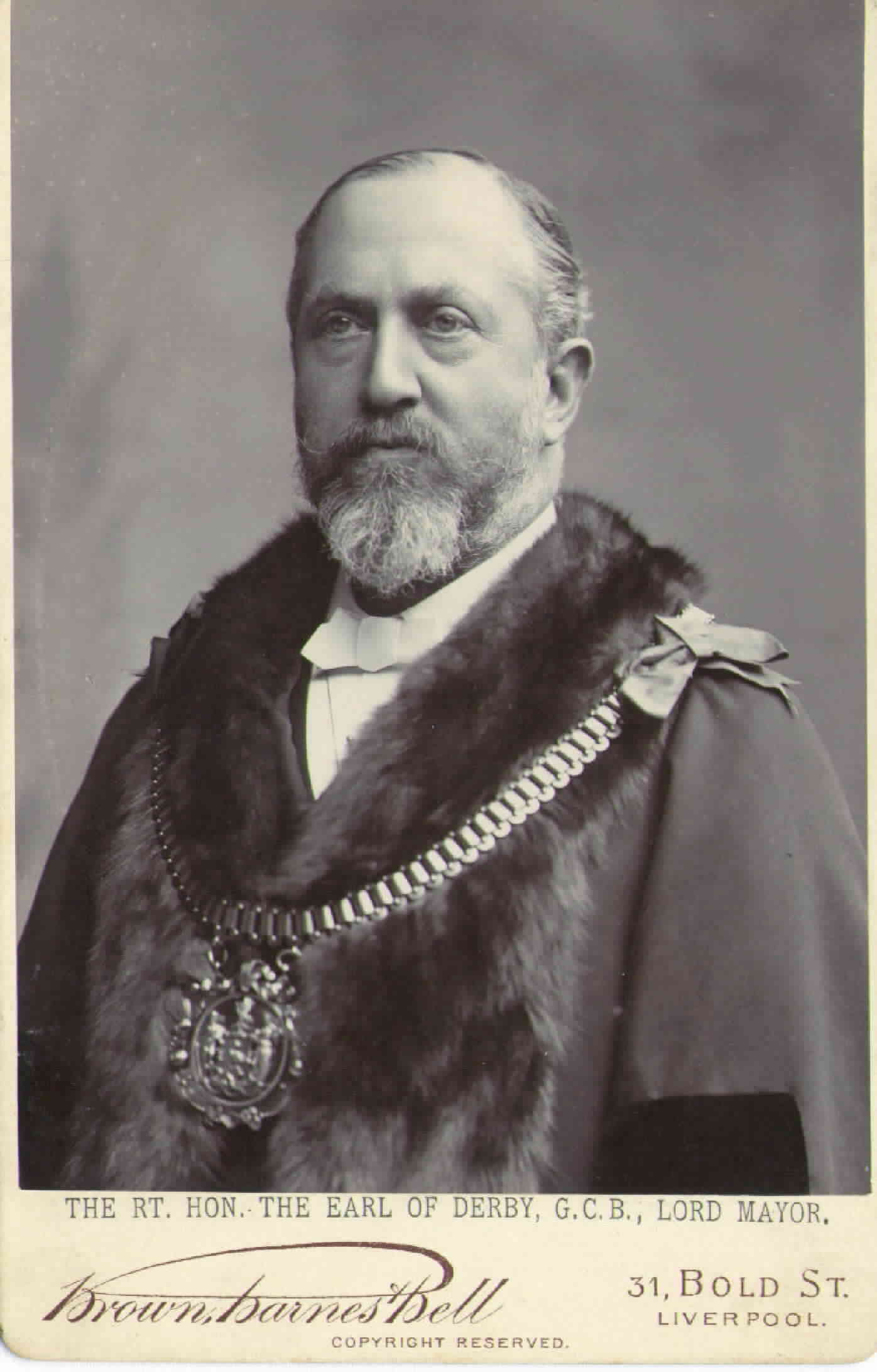
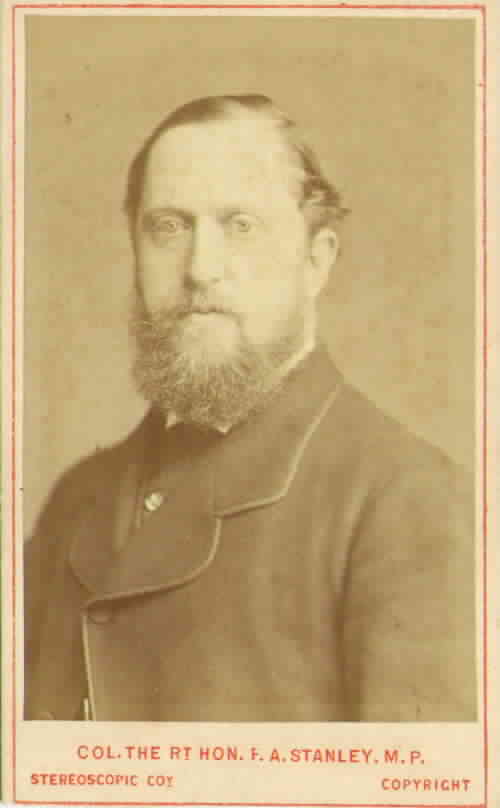
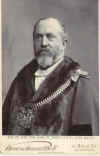
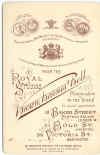
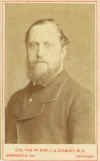
| Cabinet card and CDV photo of Lord Stanley, donator
of the Stanley Cup trophy |
 |
 |
 |
 |
| This photo was taken in
1895 or 1896 by Brown, Barnes & Bell in Liverpool, England,
while Lord Stanley was serving as the First Lord Mayor of Greater
Liverpool. |
This photo was take in
London sometime between 1873 and 1886 while Lord Stanley was a
Member of the British Parliament. |
|
Frederick Arthur Stanley
was born in London, England on January 15, 1841, the younger son
of three-time Prime Minister of England, Edward George Geoffrey
Stanley, the Fourteenth Earl of Derby. Educated at Eton and later
at military college, Frederick Stanley received his commission in
the Grenadier Guards, but opted for a political career shortly
afterwards. He was elected as a Conservative Member of Parliament
for Preston, and later represented North Lancashire and Blackpool
in the House of Commons. Lord Stanley was a Member of the British
Parliament between 1865 and 1886, including a term as Secretary
of State for the Colonies in 1885 and 1886. From 1886 to 1888,
Stanley was president of the Board of Trade. On June 11, 1888,
Lord Stanley succeeded the Marquis of Lansdowne as the sixth
Governor-General of Canada, appointed by England's reigning
monarch, Queen Victoria. Stanley's full title was the Right
Honourable Sir Frederick Arthur Stanley, Earl of Derby, Baron
Stanley of Preston, in the County of Lancaster, in the peerage of
Great Britain, Knight Grand Cross of the Most Honourable Order of
the Bath. Although Lord Stanley lived in the official residence
of the Governor-General, Rideau Hall, upon his move to Ottawa, he
built a large summer home called Stanley House in order to
indulge his love of fishing. It was located on the Baie des
Chaleurs near the mouth of the Grand Cascapedia River on the
Gaspe Peninsula. Today, Stanley House is a charming bed and
breakfast destination.
Lord Stanley's term in office as Governor-General was
uneventful, with the exception of his incomparable legacy to
hockey. While in Canada, Stanley's children discovered exciting
new winter pursuits, including snowshoeing, tobogganing, skating
and playing hockey. His sons Algernon and Arthur formed a
competitive hockey club called the Rideau Rebels, while his
daughter Isobel was one of the first female hockey players in
Canada. On March 18, 1892, the Governor-General asked Lord
Kilcoursie, a vice-regal aide who played on the Rideau Rebels
with Stanley's sons, to read a letter on his behalf to the Ottawa
Athletic Association.
'I have for some time been thinking that it would be a good
thing if there were a challenge cup, which would be held from
year to year by the leading hockey club in the Dominion.
Considering the general interest which hockey matches now elicit,
and the importance of having the game played fairly and under
rules generally recognized, I am willing to give a cup which
shall be held from year to year by the winning club.'
Lord Stanley's offer was enthusiastically accepted, and he
subsequently requested one of his aides, Captain Colville, to
purchase an appropriate trophy. Known originally as the Dominion
Hockey Challenge Cup, the trophy was purchased for ten guineas
($48.67 at the time) and quickly became known as the Stanley Cup.
The silver bowl was created in Sheffield, England but purchased
in London, England and stood 7.28 inches tall and 11.42 inches in
diameter. Today, this original Stanley Cup is kept on permanent
display at the Hockey Hall of Fame.
Lord Stanley insisted that the Cup remain a challenge trophy,
presented for the amateur championship of Canada, and never
become the property of any one team. The first Stanley Cup winner
was the Montreal Amateur Athletic Association in 1893. In 1910,
after having being awarded to both amateur and professional
teams, the Stanley Cup was awarded exclusively to professional
teams. From the National Hockey League's formation in 1917 until
1926, the magnificent trophy was awarded to the winner of a
playoff between the NHL and the Pacific Coast Hockey League. When
the PCHL dissolved in 1927, the Stanley Cup was presented
exclusively to NHL playoff champions.
Lord Stanley never witnessed either a championship hockey
contest or his namesake trophy presented to a championship team.
Stanley's term as Governor-General was scheduled to end in
September 1893, however, in April of that year (midway through
the hockey season), Stanley's brother, the Fifteenth Earl of
Derby, died. Lord Stanley resigned the Governor-Generalship and
returned home to England on July 15, 1893 to become the Sixteenth
Earl of Derby. In 1893, he was appointed president of University
College and when the University of Liverpool was established in
1903, Lord Stanley became the university's first Chancellor.
Between 1895 and 1896, Lord Stanley served as the First Lord
Mayor of Greater Liverpool and also later served as Mayor of
Preston. Lord Stanley died at Knowsley, in Lancashire, on June
14, 1908.
|
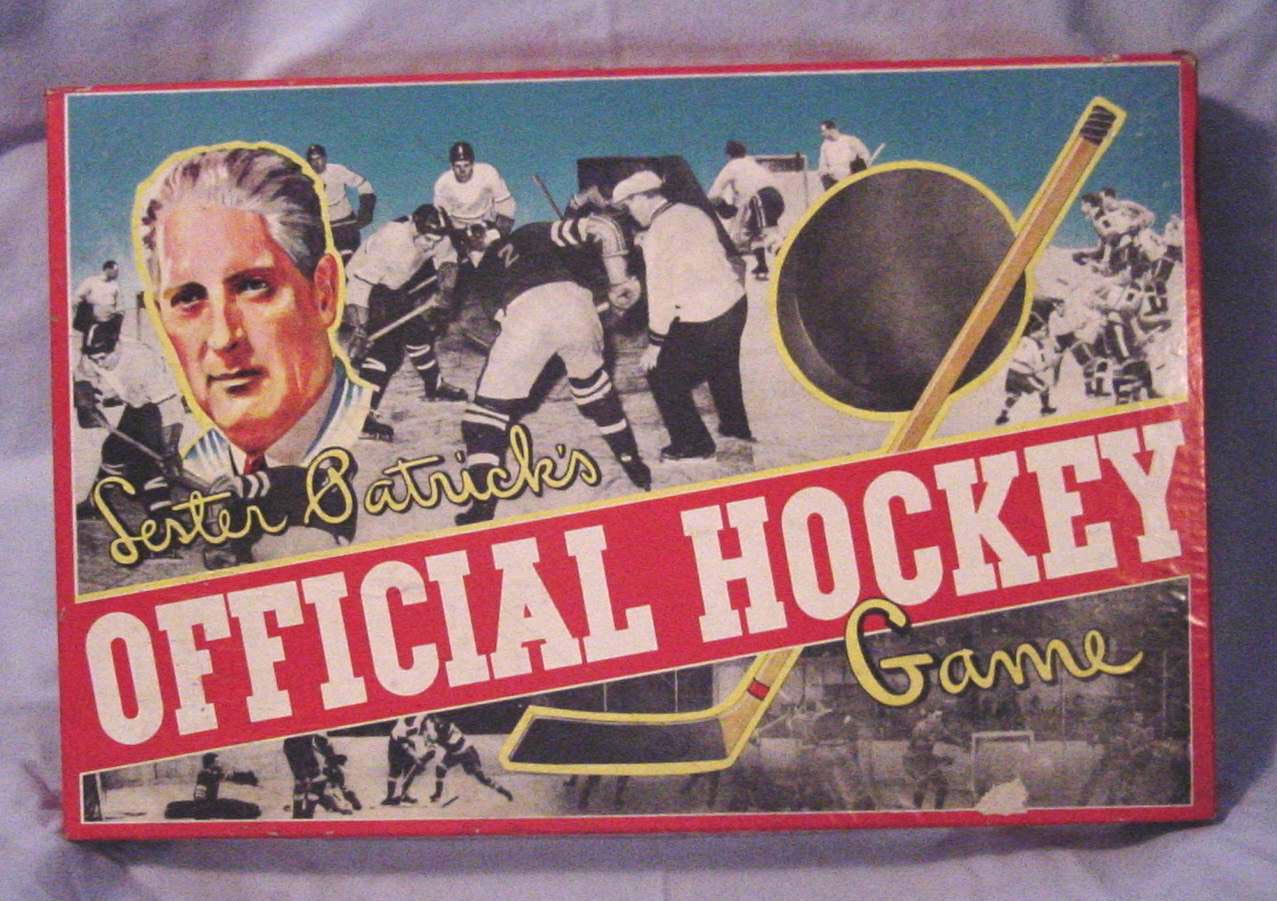
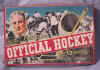
| "Lester
Patrick's Official Hockey Board Game, 1930-1940" |
|
|
|
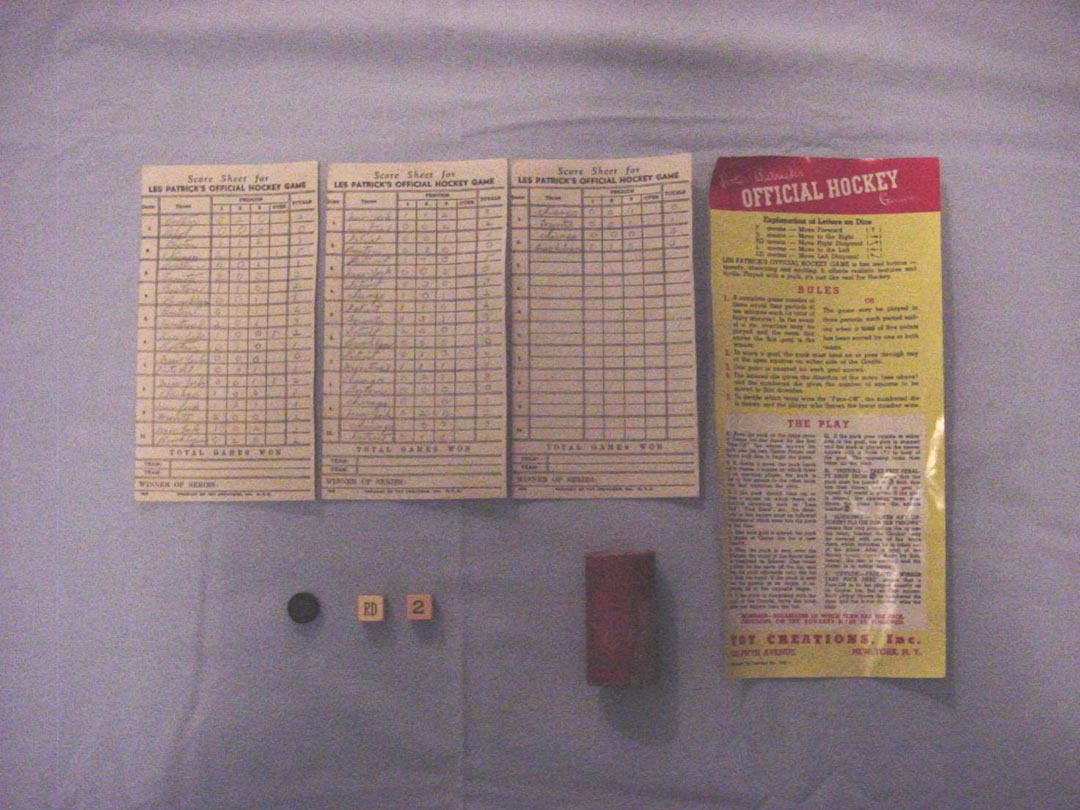
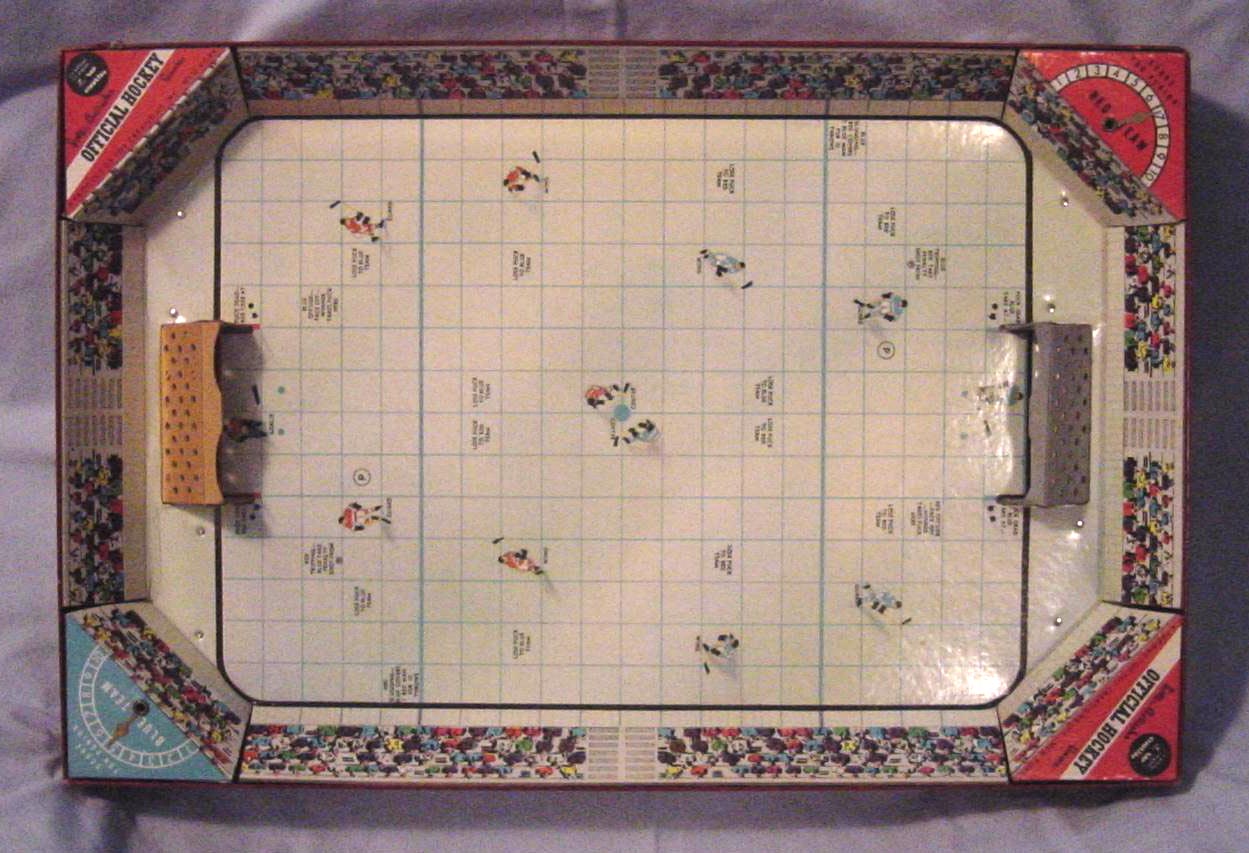
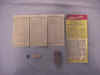
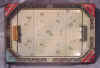
| This old hockey game was endorsed by the legendary
Hockey Hall of Fame player and coach, Lester Patrick. I cannot
find a date on it, however I am going to guess it was made around
1939 or 1940. It is in beautiful condition and even has the
original rules, score cards, dice, shaker and puck! A great
vintage piece of hockey memorabilia endorsed by one of hockey's
legends. |
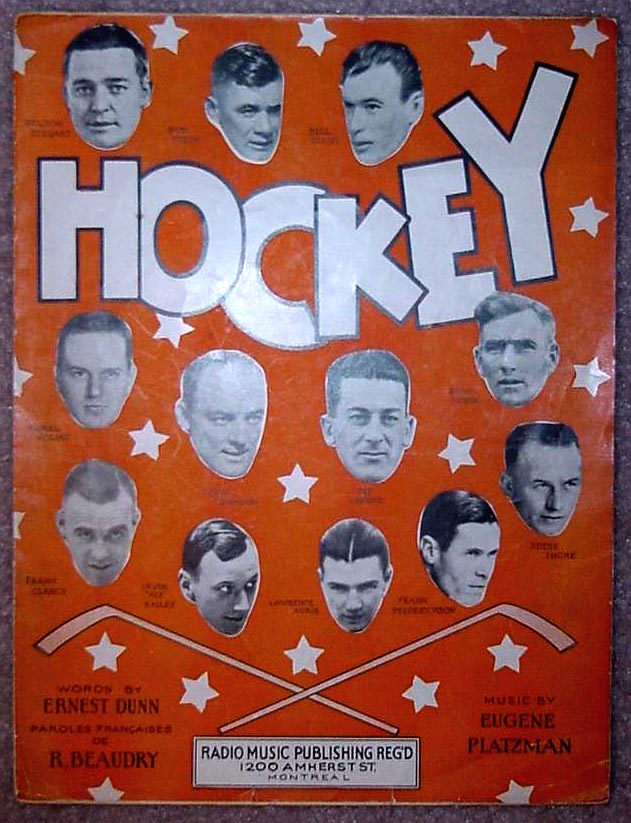
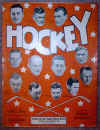
1929
Hockey Sheet Music by Radio Music Publishing of Montreal,
many deceased Hockey Hall of Fame Players on the
cover. |
|
|
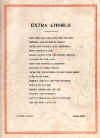
The lyrics inside this sheet music are just
fantastic. Here is the actual "Hockey" song:
One certain day my wifey dear refused a nickel treat, She wasn't
hungry, so she said, and didn't care to eat; I took her to a
hockey game, tho't she'd enjoy the band, But music had no charms
for her, she proved to be a fan.
Hoc-hoc-hoc-key, Hoc-hoc-hoc-key, is all she talks about, Every
morning, every evening day in and out, With her Morenz, Boucher,
Smith, she gives me a pain, Clancy, Nighbor, Billy Cook, I'll
soon be insane. For my breakfast, for my supper, Gee! it's a
crime, I'm fed up right to the eyes with the same old line... She
just raves like no one can, Yes, and so does her old man
Hoc-hoc-hoc-key, hoc-hoc-hoc-key, Oh! boy, what a fan! fan!
That certain day I will recall till cows begin to fly, On
Saturday night's I'm always broke, you know the reason why, My
wi-fey's case is helpless now she'll never be the same, So I
intend to shoot the goof who introduced the game.
Hoc-hoc-hoc-key, Hoc-hoc-hoc-key, is all she wants to see, When
it's snowing when it's blowing and after tea, She can't tell a
wagon hub from a monkey wrench, She know's every blooming sub
that plays on the bench, How she'll holler for her dollar, Think
she's off-side; Now I'm sorry I said "thanks for the buggy
ride",..... She just raves like no one can, Yes, and so does her
old man Hoc-hoc-hoc-key, hoc-hoc-hoc-key, Oh! boy, what a fan!
fan!
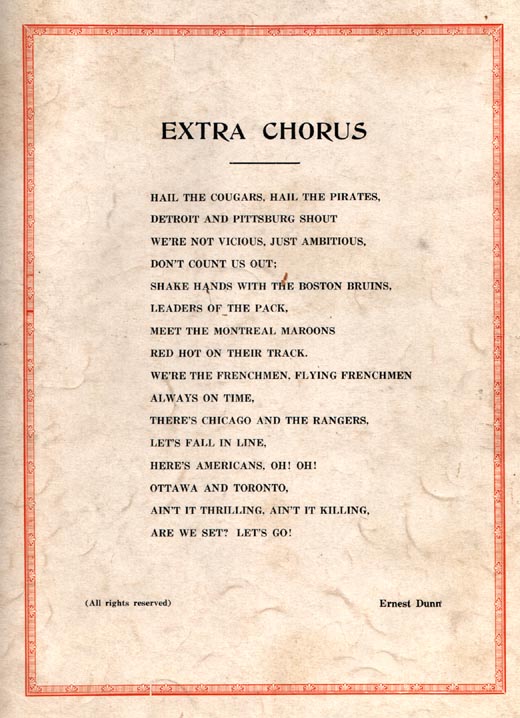
(See additional chorus on the rear cover (above right photo)
that talks about the Maroons, the Pirates, the Bruins
etc)
|
|
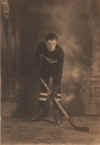
Vintage studio photo of a hockey player early
1900's |
 |
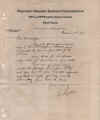
| 1939
Frank Boucher handwritten autographed
letter |
|
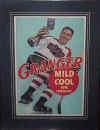
| 1939
Busher Jackson Granger Tobacco advertising
poster |
|
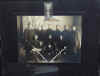
| 1910's
Aurora, BC hockey team photo |
 |
|
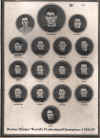
1928-29 Boston Bruins Hockey Team Photo Collage |
 |
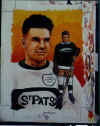
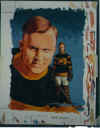
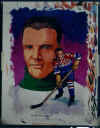
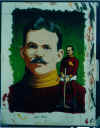
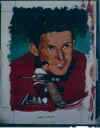
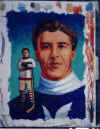
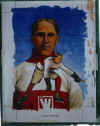
| 1983 Hockey Hall of Fame Postcard printers
proofs |
 |
 |
 |
 |
|
 |
 |
 |
 |
 |
 |
 |
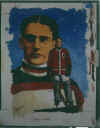 |
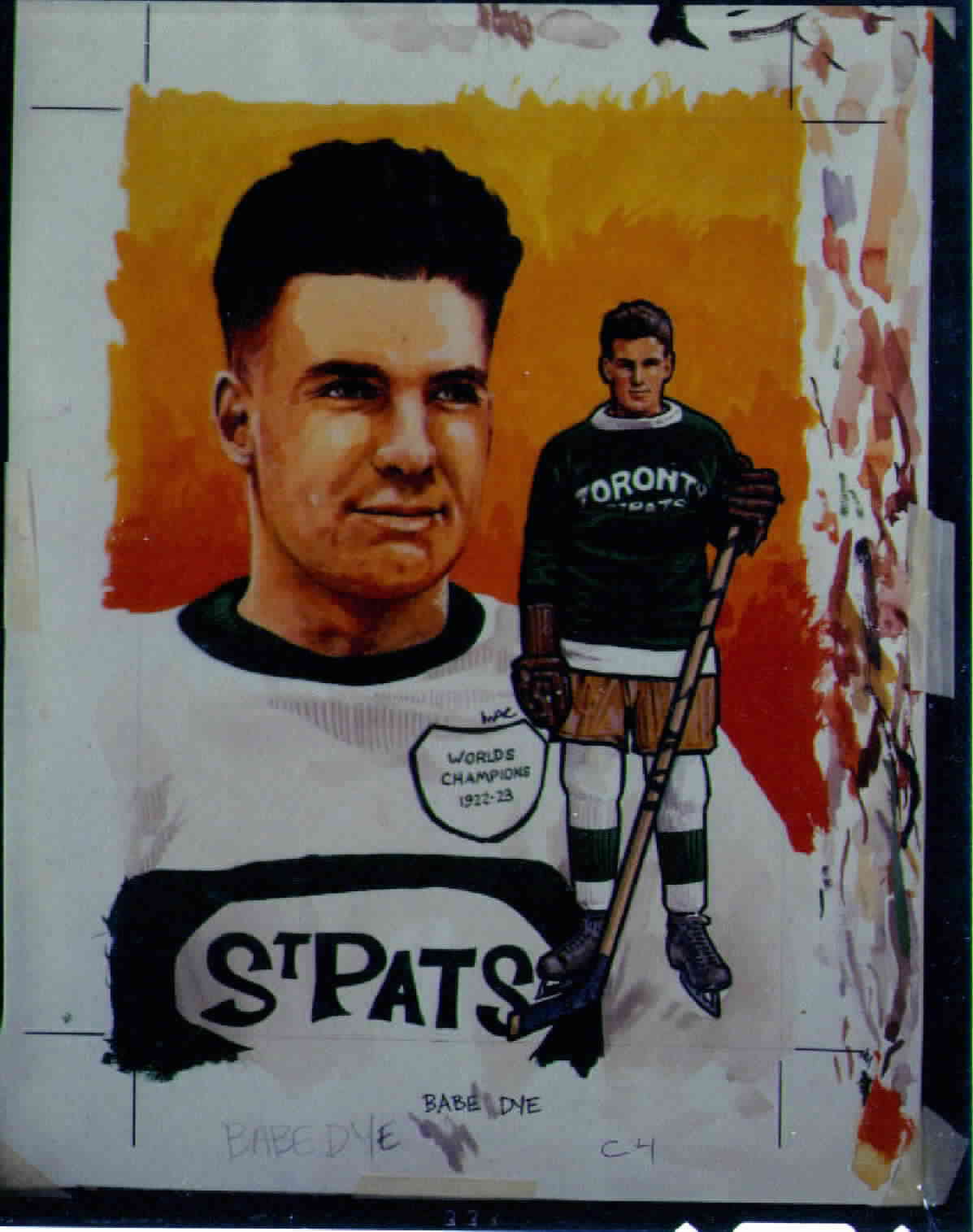
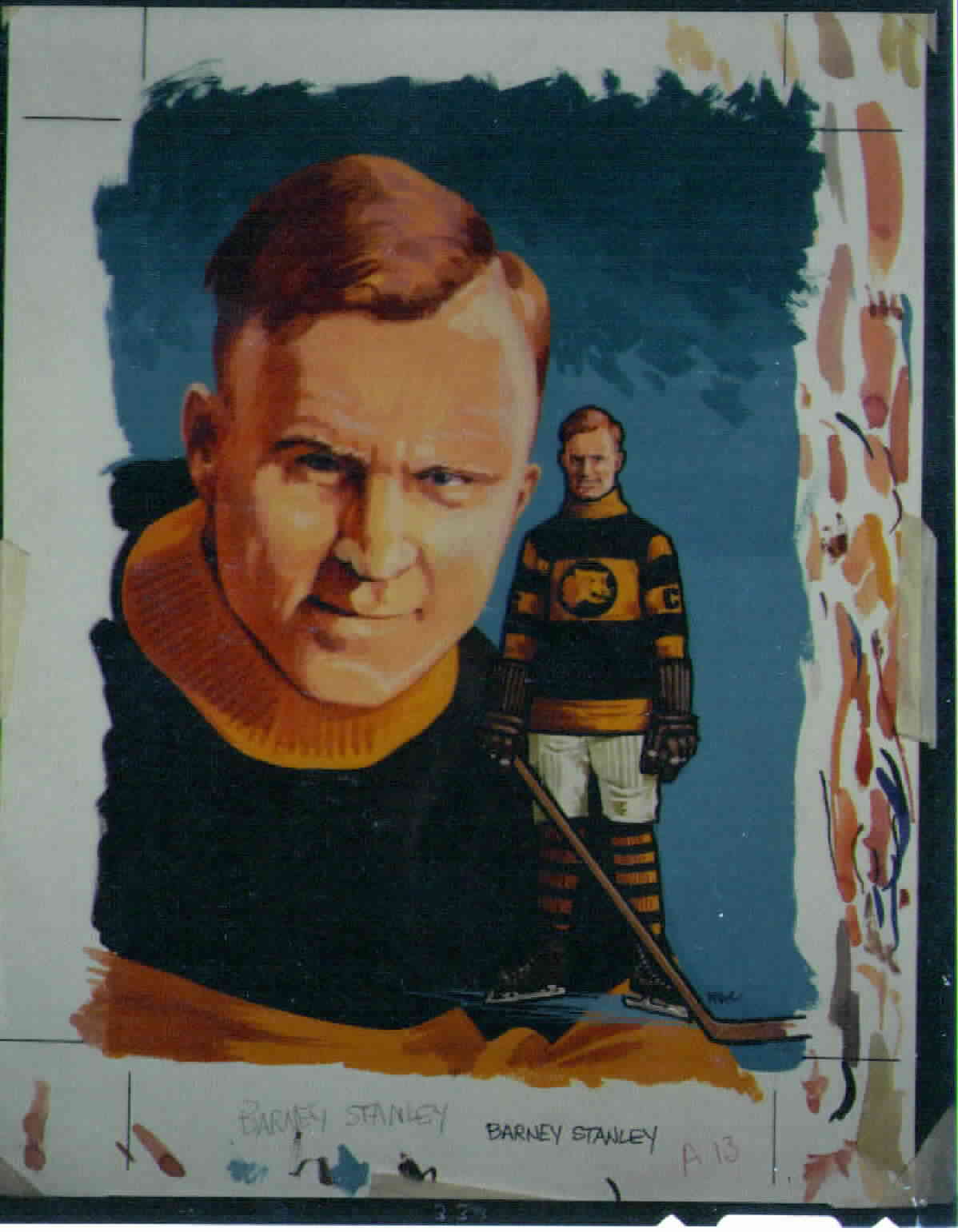
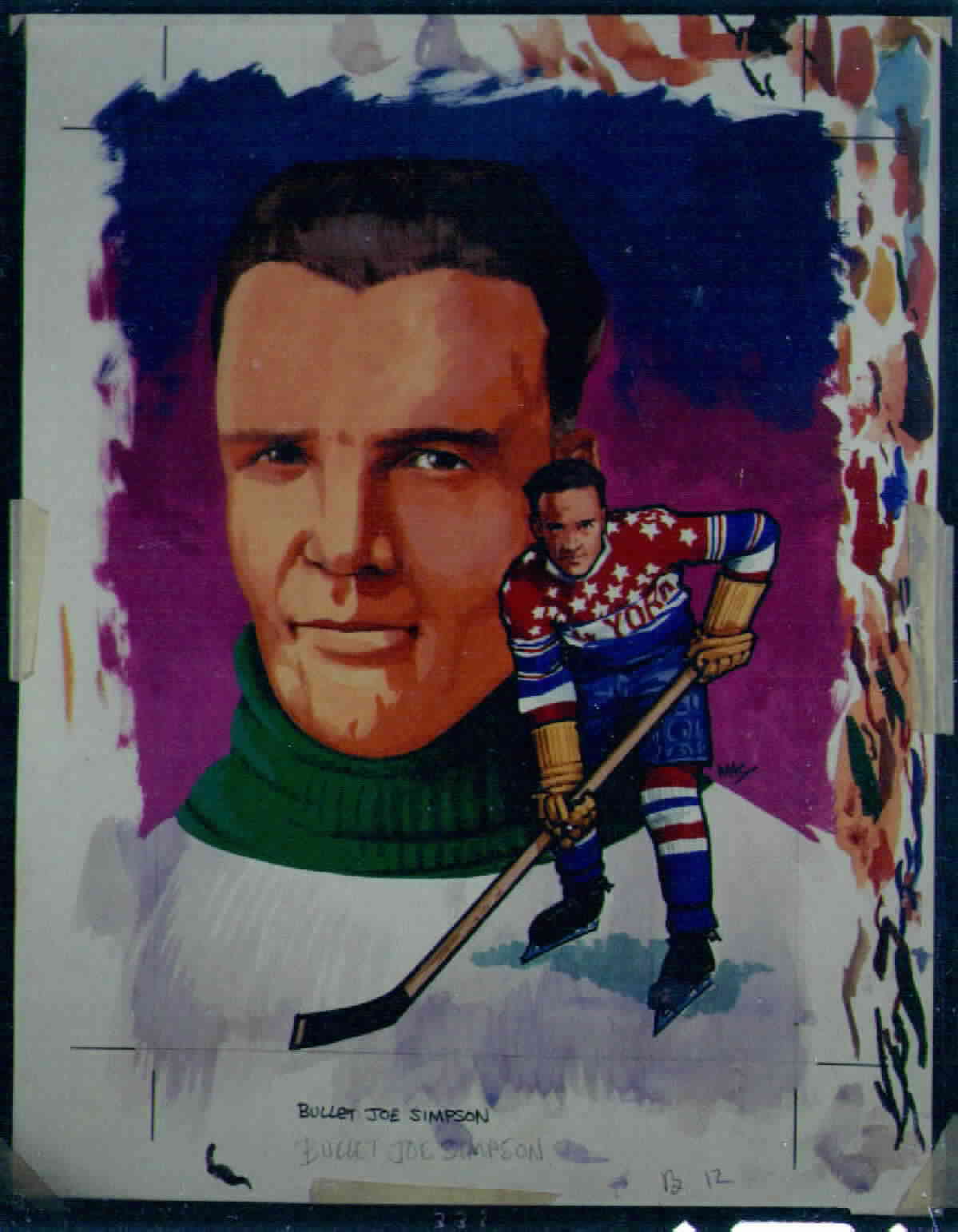
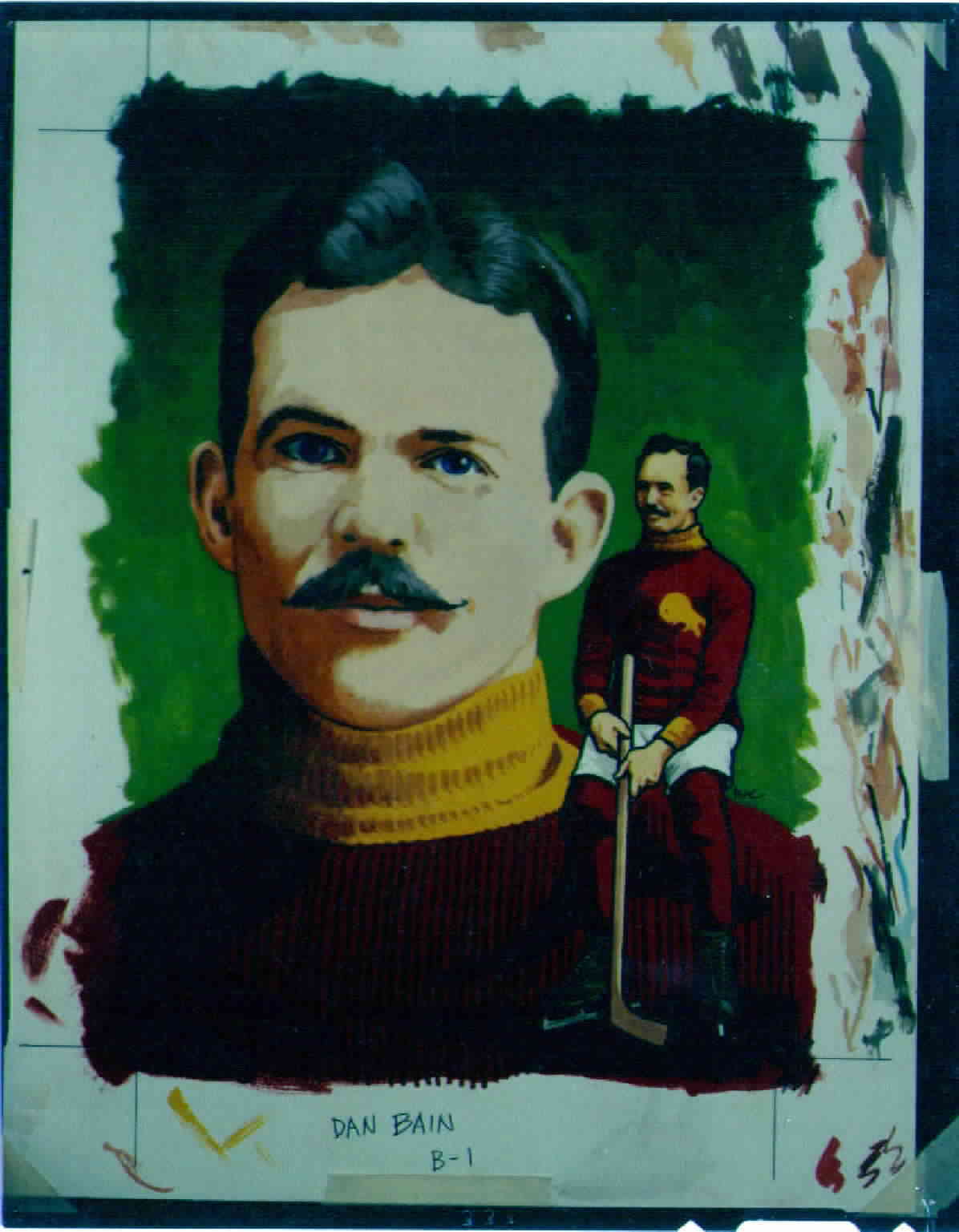
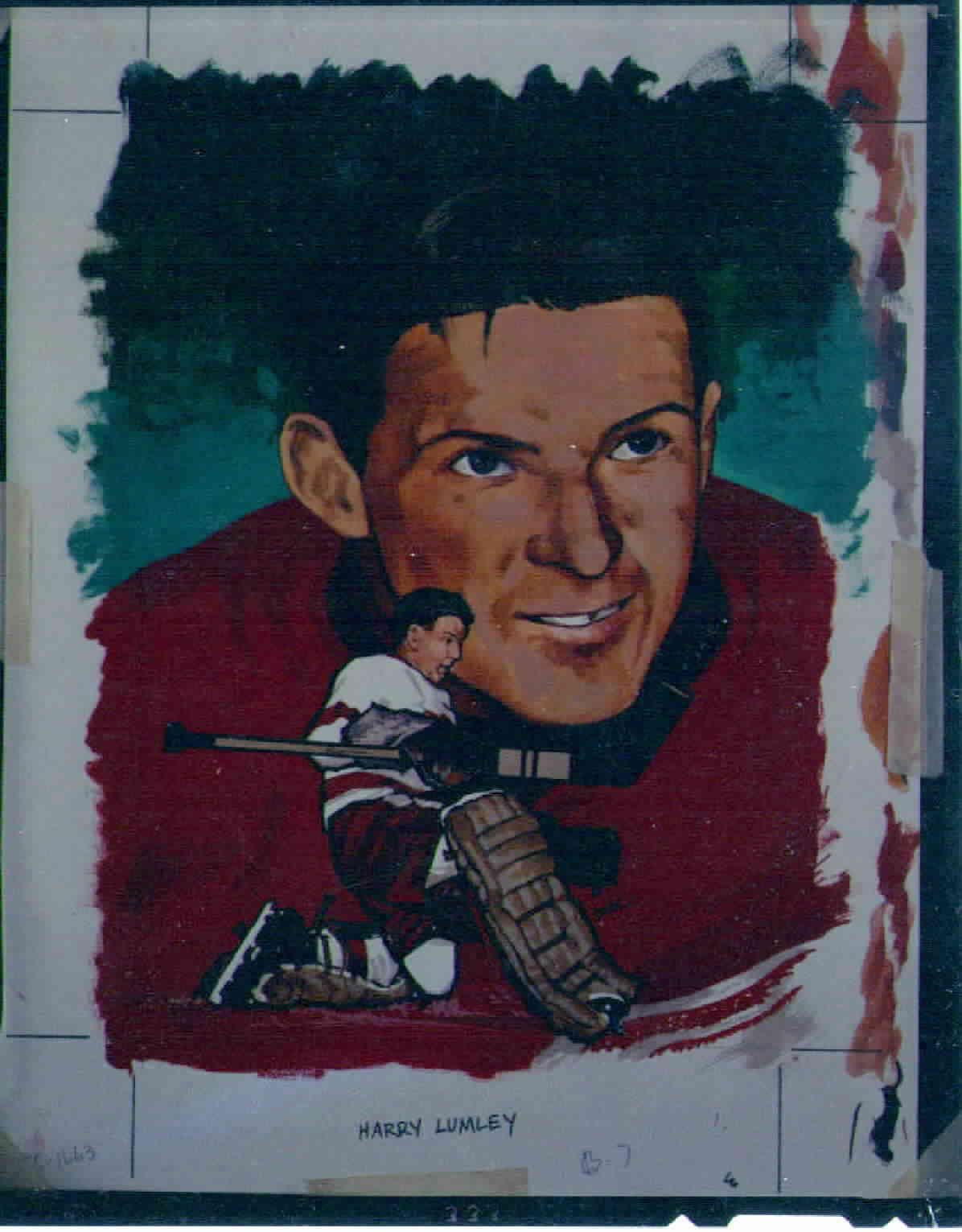
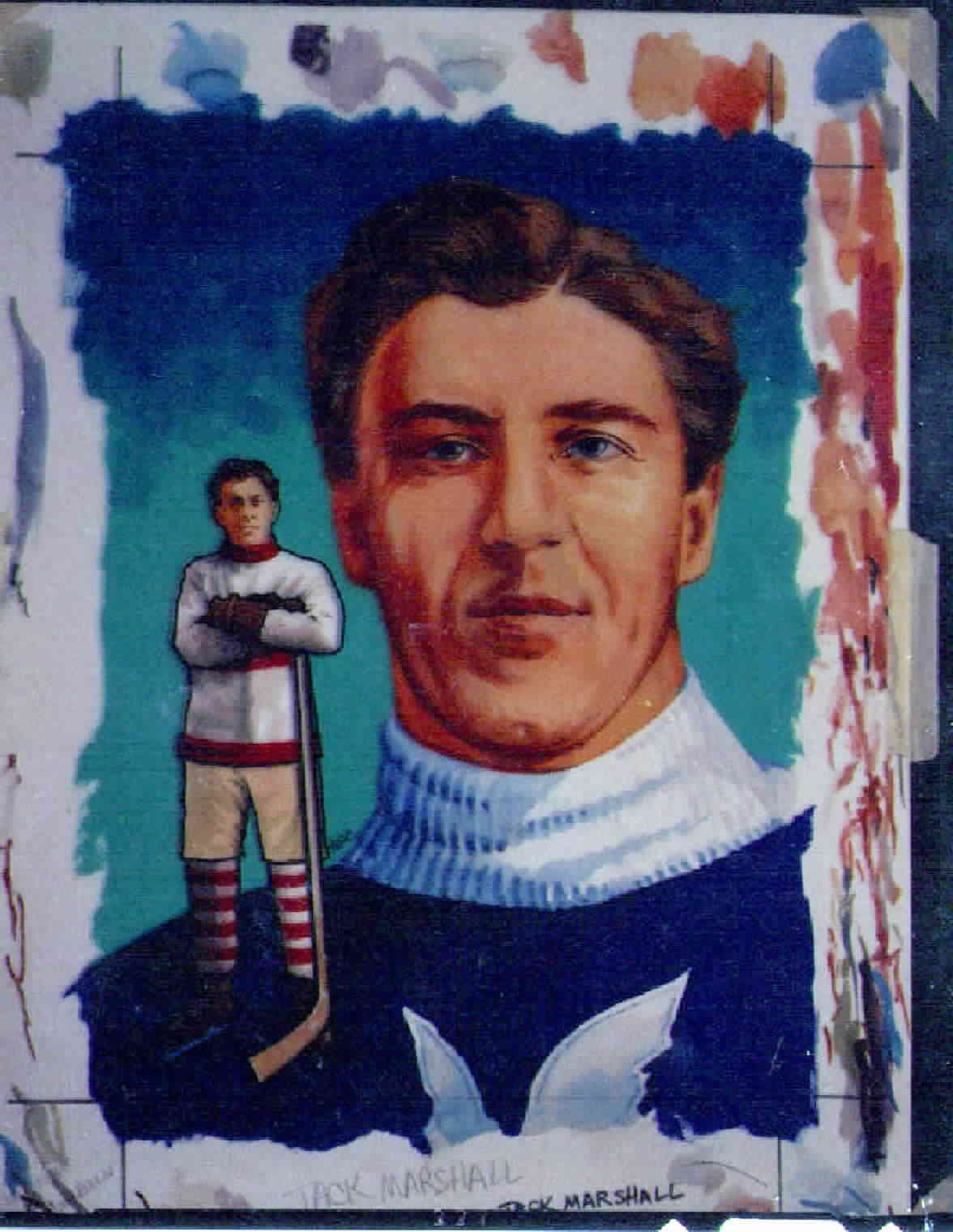
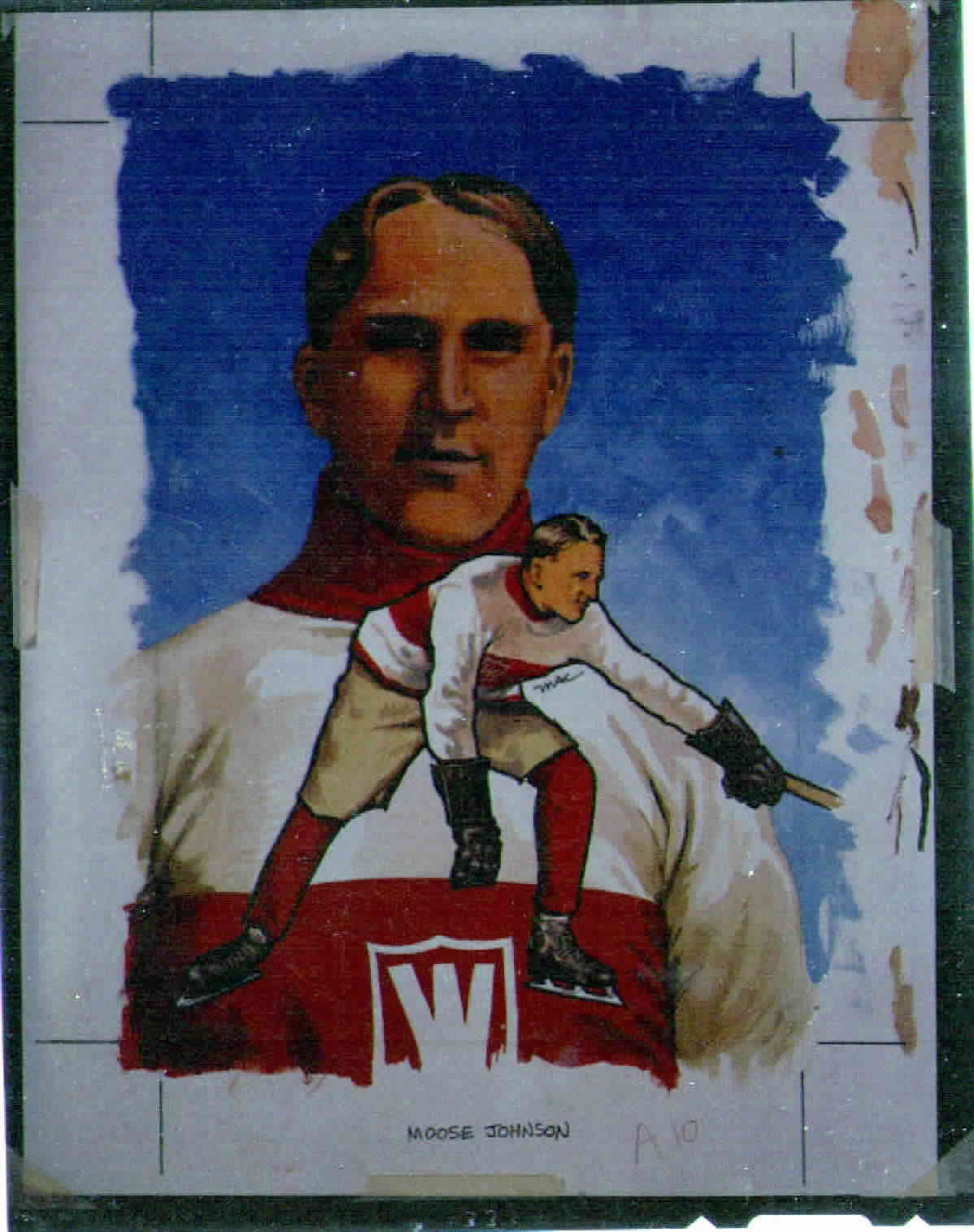
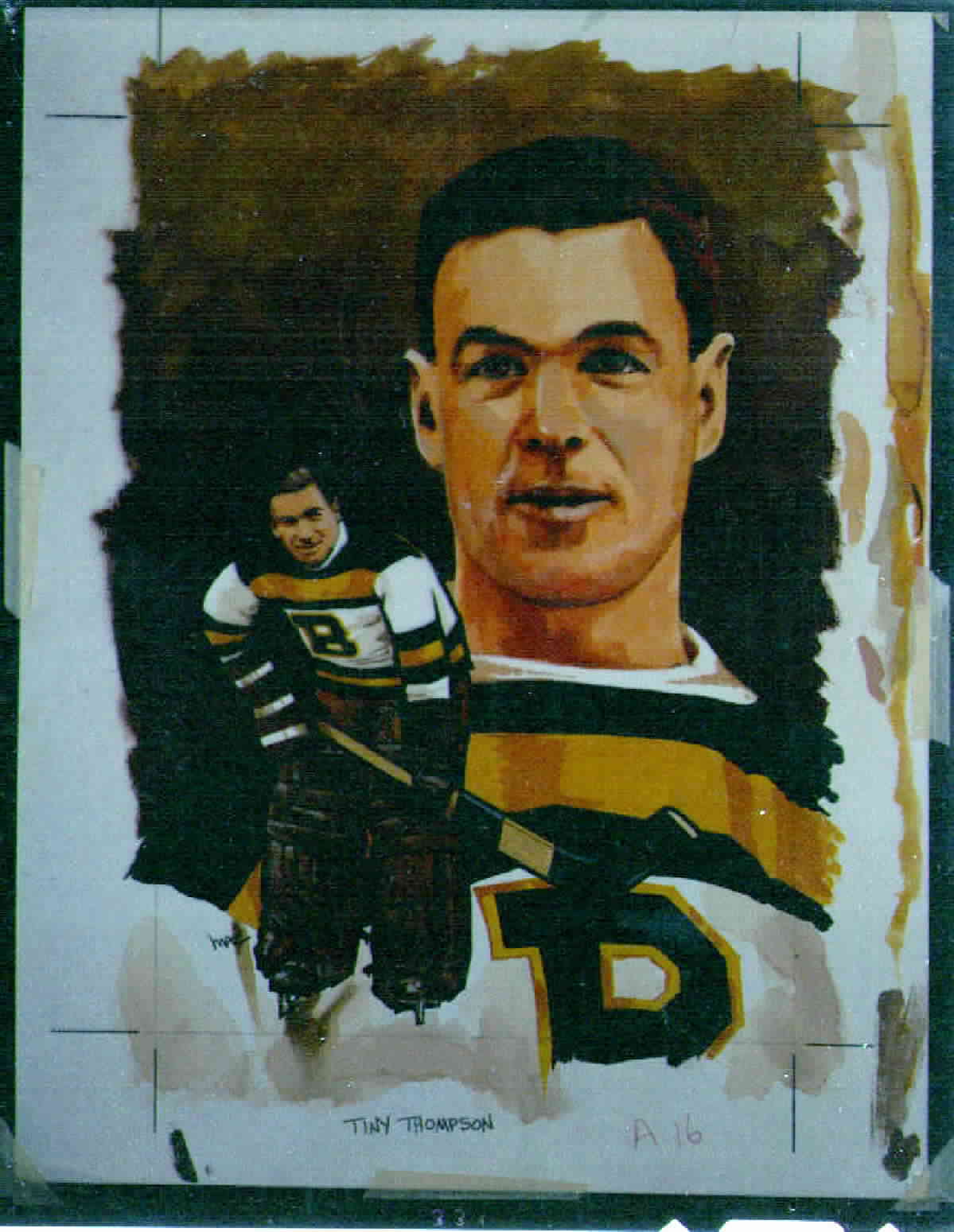
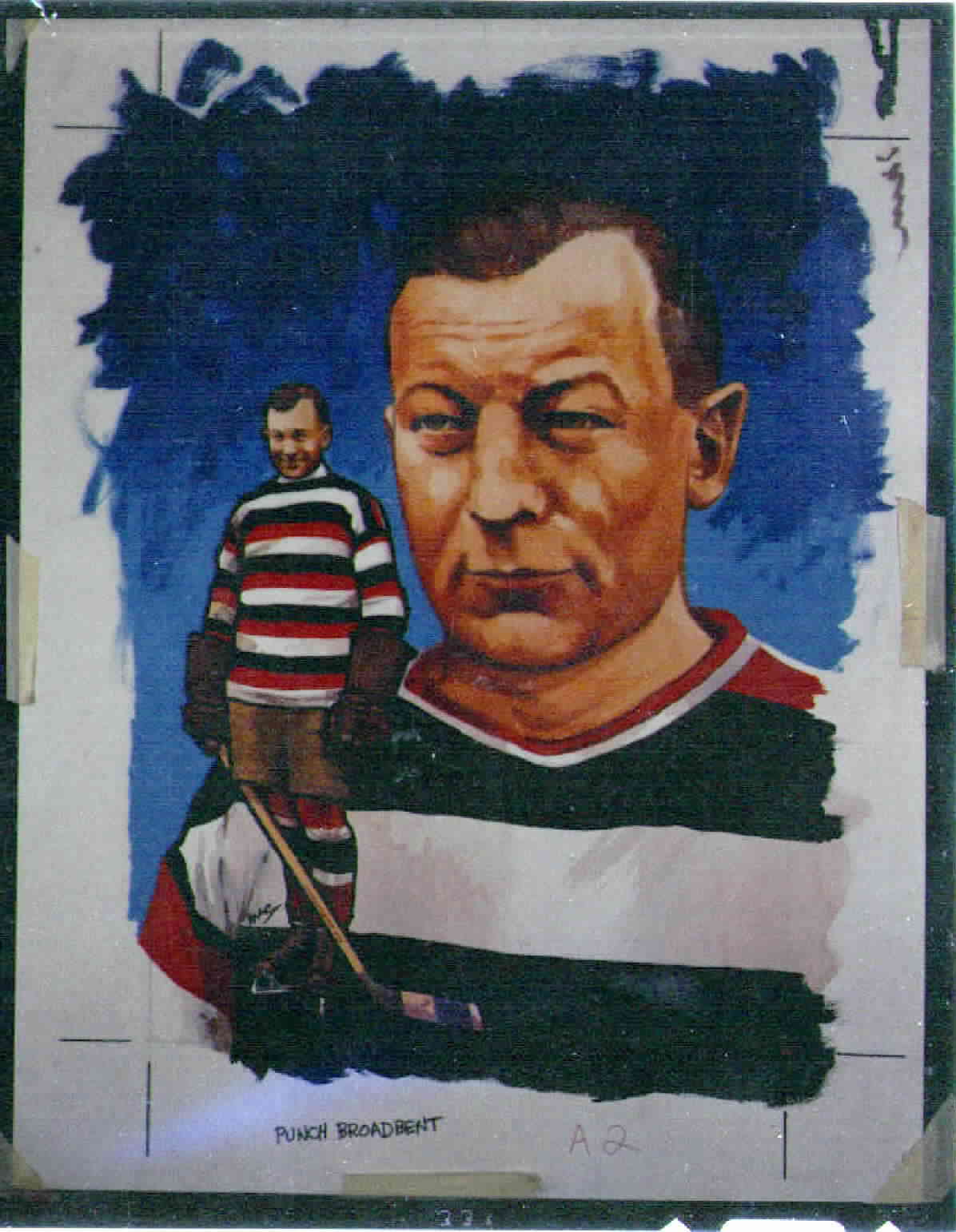
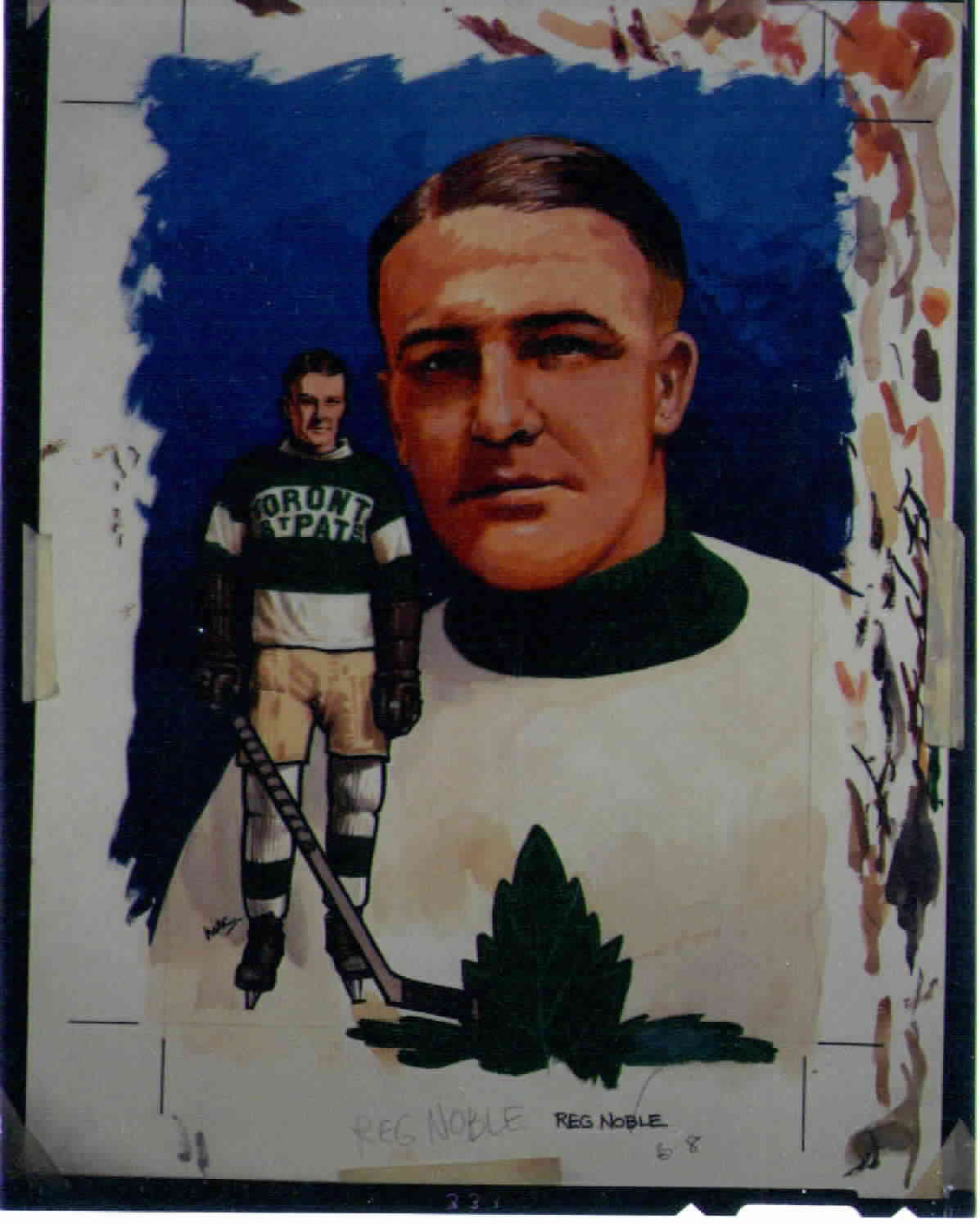
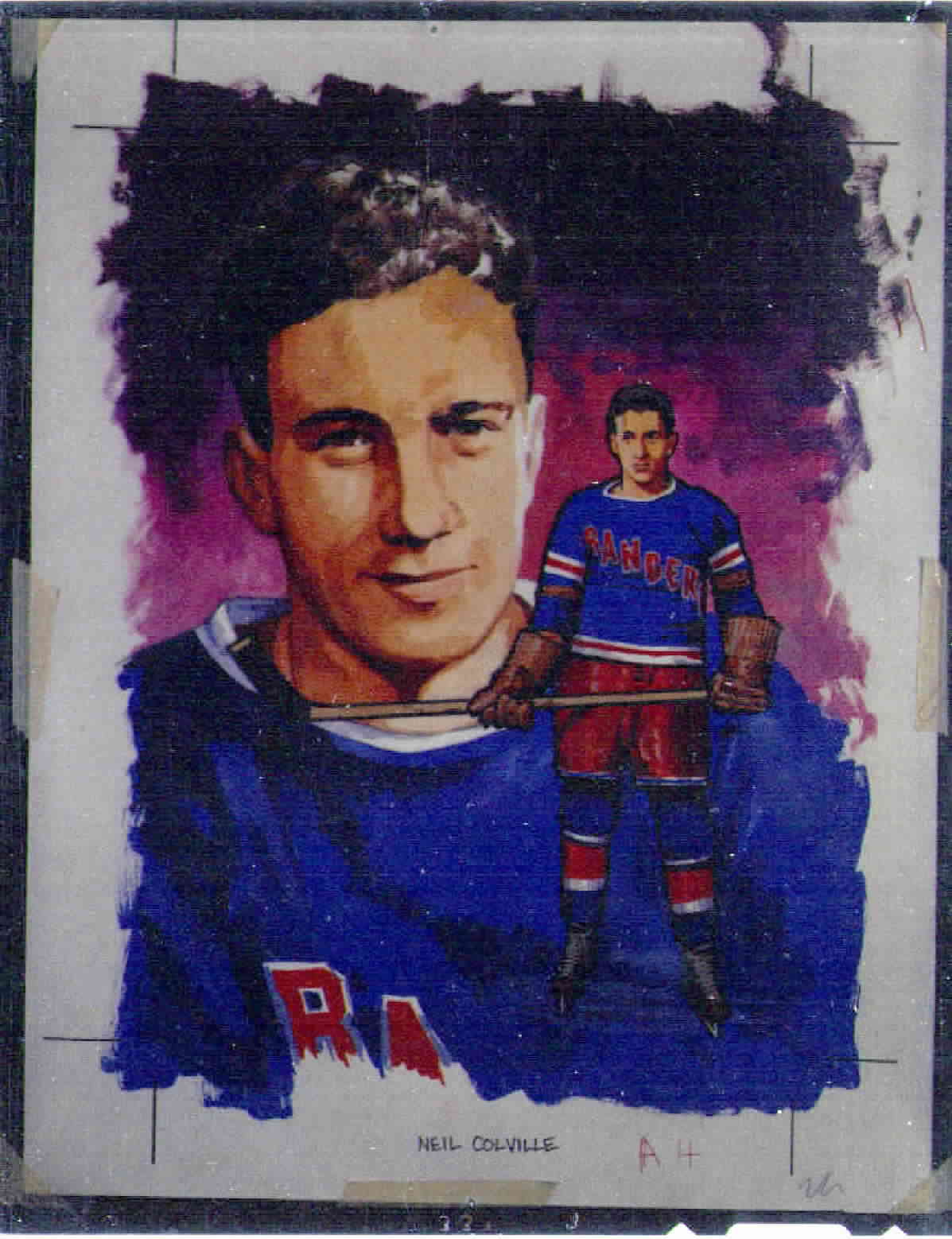
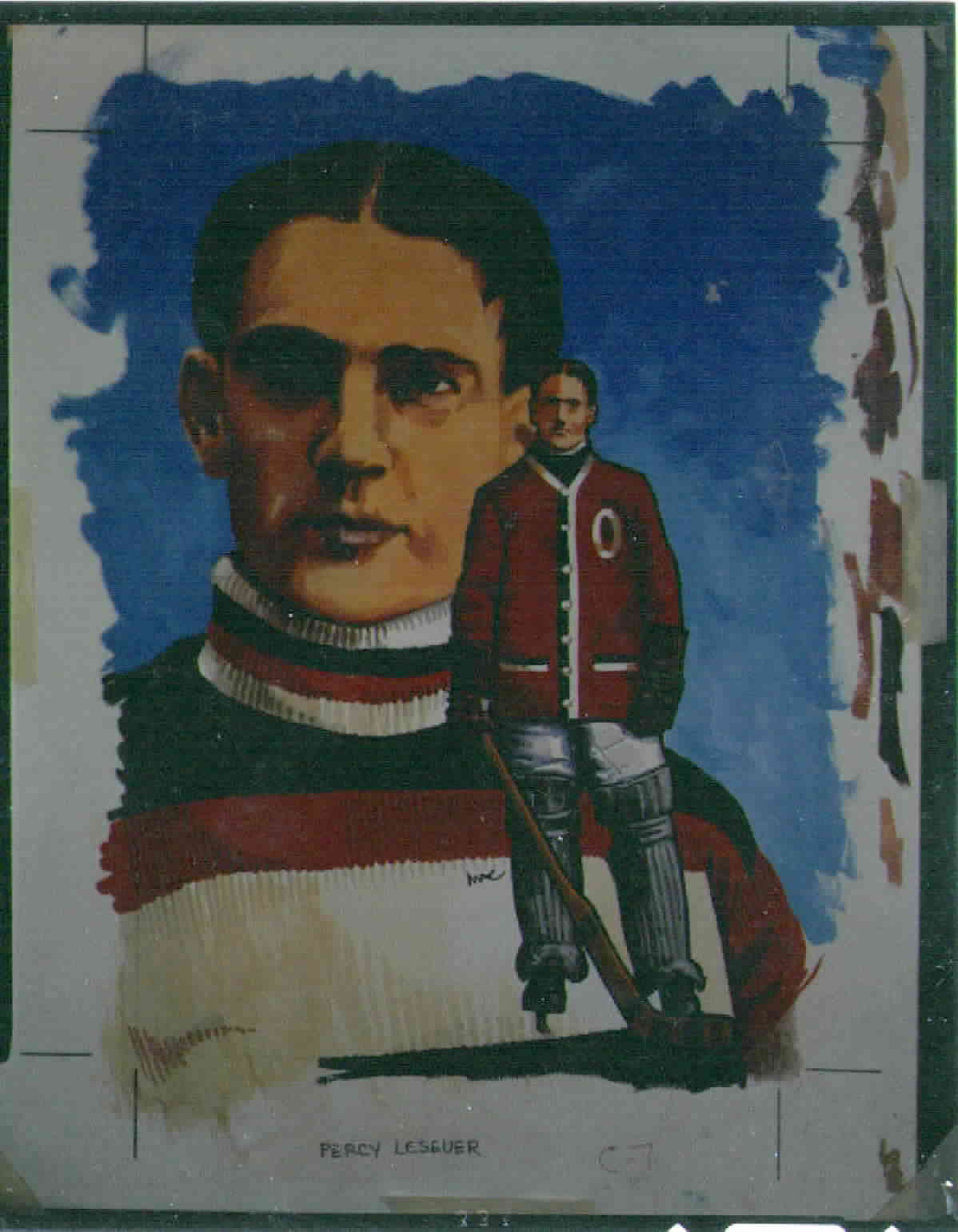
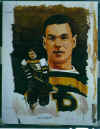
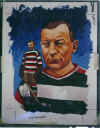
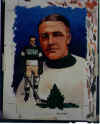
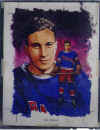
| These are the postcard
transparency proofs used by the printer to produce these 12 cards
for the 1983 Hockey Hall of Fame postcard series. I do not
usually buy newer items, however the artwork of Carlton McDermott
is stunning and I thought they were a great one-of a kind item of
these Hockey Hall of Fame players. |
| Home | Hockey Memorabilia - Page 2 |
copyright©2000-2008
All hockey memorabilia and their images are the exclusive property of the owner and may not be reprinted, copied or used without written permission from the owner. For licensing or other questions please contact hockeybum@proaxis.com
|
 |
|